Houston’s literary scene shows signs of surviving – and thriving post-pandemic

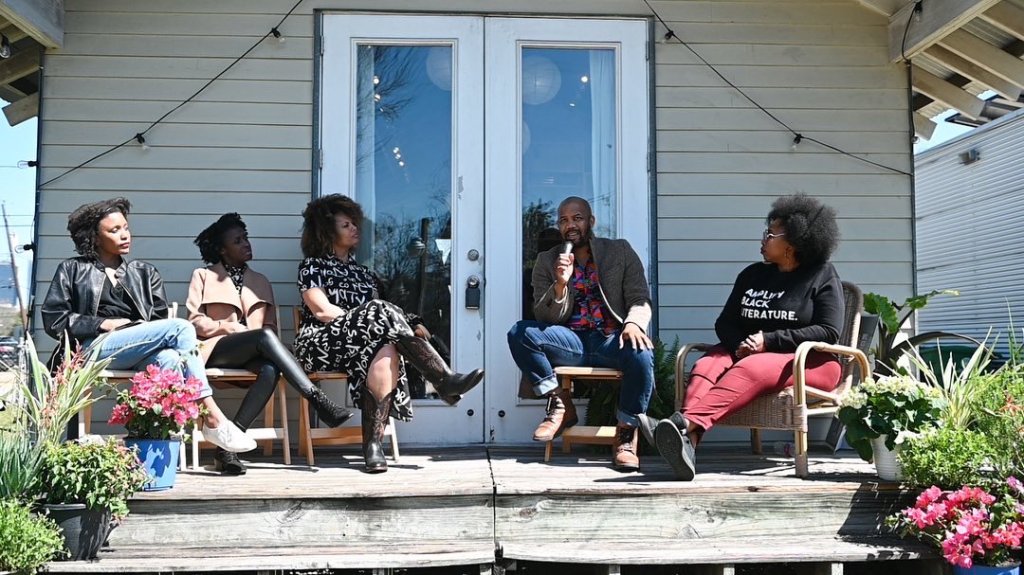
BIPOC Book Festival founders Brooke Lewis, Jaundrea Clay, and Brittany Britto; Houston Poet Laureate Emanuelee “Outspoken” Bean; and Houston Poet Laureate Emeritus Deborah “D.E.E.P.” Mouton at Kindred Stories Bookstore / Photo by J. Vince

From national grants to the new BIPOC Book Fest and the return of Writefest, recent developments suggest that Houston’s literary scene is recovering, returning, and growing as we emerge from the pandemic.

Five Houston literary groups will receive aid from the Literary Emergency Fund, which announced last week $4.3 million in funding to support 313 literary nonprofits and publishers across the U.S. – as these groups experience continued financial losses due to COVID-19 and as literary magazines struggle to stay afloat.

The 2022 Houston recipients are:

Launched in 2020, the Literary Emergency Fund is administered by the Academy of American Poets, the Community of Literary Magazines & Presses, and the National Book Foundation, with a grant from the Mellon Foundation.

“In some ways, this year was even more challenging than last year for literary organizations and publishers, as there were fewer opportunities to receive emergency funding but also increased costs including producing hybrid events,” said Ruth Dickey, Executive Director of the National Book Foundation, in a statement.

The emergency funding helps these organizations continue to serve readers, writers, students, and teachers, who “rely on our country’s vibrant ecosystem of literary magazines, presses, and organizations — one that reveals the power and the possibility of the literary arts to the broader public,” according to Elizabeth Alexander, President of the Mellon Foundation.

With plans first announced last fall, Houston’s inaugural BIPOC Book Fest is coming to fruition and takes place this weekend, April 23 – 24.

While the city has seen other notable efforts to support writers of color, the festival is the first of its kind in Houston centered on literary works by and about Black, Indigenous, and People of Color, who are underrepresented in U.S. publishing.

An analysis of children’s books in 2020 shows that only 8% were written by Black authors and 12% centered Black characters, while 7% were by Latinx authors and 6% were about Latinx characters – with those percentages changing little in 2021.

Founded by Houston journalists Brittany Britto GarleyJaundrea Clay, and Brooke Lewis, who grew up with a love of school book fairs, the festival aims to encourage reading through representation, inclusion, and dialogue.

It kicks off on Saturday, April 23 at Buffalo Soldiers Museum with a book fair for adults and teens. The day also includes panels on book banning, the state of Latino literature and publishing, contemporary voices of the Asian diaspora, and comic books, as well as a poetry showcase featuring Texas Poet Laureate Lupe Mendez and Houston Youth Poet Laureate Avalon Hogans. Tickets and a full schedule are available here.

The festival continues on Sunday, April 24 at Smither Park with the Little BIPOC Book Fest, a free children’s event aimed at developing and empowering young readers.

This comes at a time when Houston-area schools are seeing a widening gap in student reading levels due to the pandemic.

The Little BIPOC Book Fest will feature book giveaways, writing workshops, crafts, and storytime with award-winning authors, including Jasminne Mendez and Alda P. Hobbs. Free tickets can be reserved here.
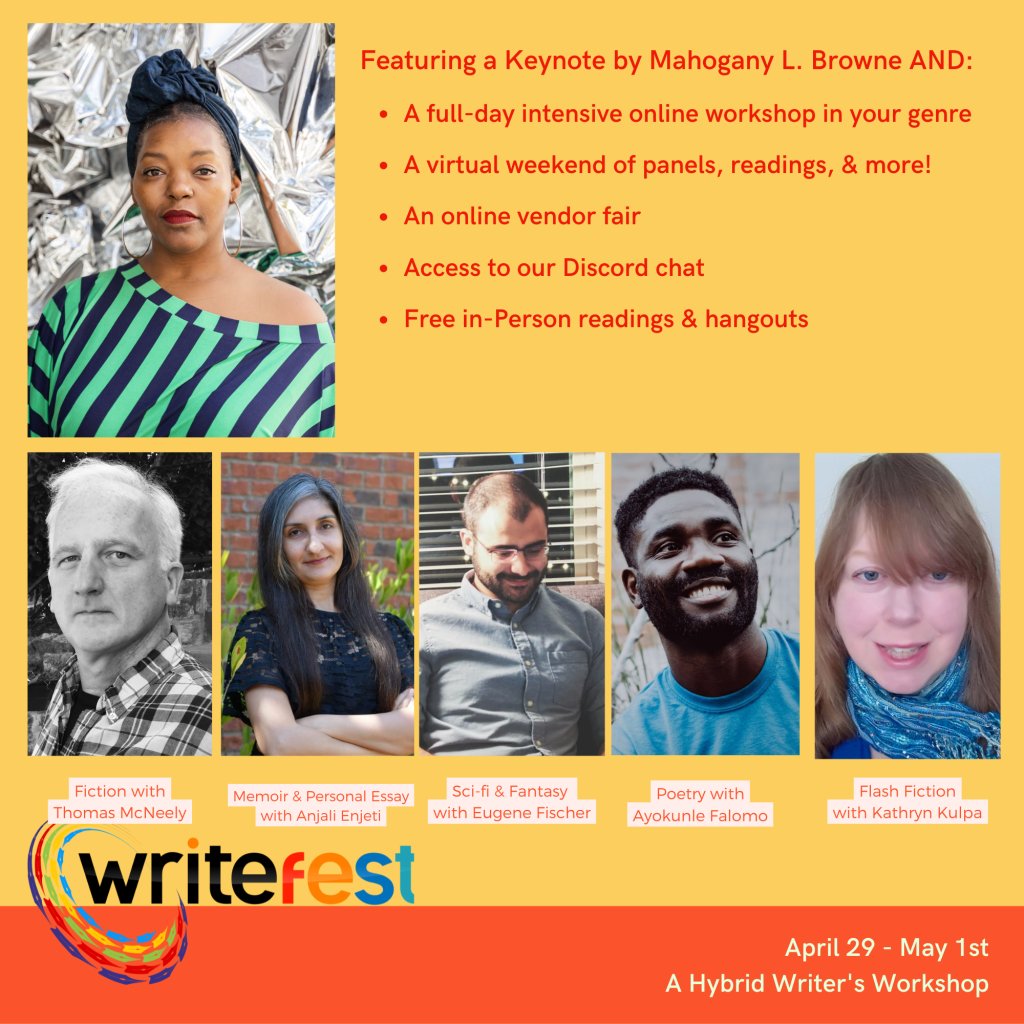
The indie writers’ festival, Writefest, is back after a two-year hiatus.

Founded in 2016 by the Houston grassroots literary nonprofit Writespace, the festival grew from a desire to help local writers not only improve their craft but also connect them with agents, teach them about the industry, and build community.

“The last Writefest was planned for 2020. We already had our keynote selected (poet Jericho Brown, who won the Pulitzer Prize that year), and we were forced to cancel,” said Holly Lyn Walrath, the festival’s coordinator and a board member of Writespace, in an email.

“In 2021, Writespace underwent a shift in board management, and we felt it wasn’t yet safe for all of our writers to hold an in-person event,” she said.

This year, the festival made the decision to go virtual, April 29 – 30.

Nearly 50 editors and writers – many Houston- and Texas-based, as well as those from around the country – will present online writing workshops and panels on topics like submissions, podcasting, publishing, slam poetry, horror fiction, writing for young writers, inclusivity and representation, writing sexuality and gender, and writing through trauma.

There will be two in-person events – a free open mic on April 29 at The Orange Show and a Writefest Social on April 30 at City Orchard Cidery.

A complete schedule and registration details are available here.

“We’ve made this year’s festival more intimate and virtual, so while there are fewer panels than in the past, I think the events will serve our diverse literary community in new ways,” said Walrath. “Writers are starved for engagement.”

No more ‘SPA’ – The organization soon becomes ‘Performing Arts Houston’

Winners and performers of the 2021 Houston Artist Commissioning Project with Mayor Sylvester Turner / Asaeda Badat Photography

After 55 years, Society for the Performing Arts is changing its name to Performing Arts Houston.

The major nonprofit arts presenter publicly announced the new name on April 5 in a newsletter to patrons and on social media.

The new name goes into effect on April 12, along with a new website, new branding, and a new membership program. That same day, Performing Arts Houston will also announce its 2022-2023 season and open applications for its 2nd annual Houston Artist Commissioning Project.

“Dropping the word ‘Society’ from the name helps us welcome everyone to the performing arts. This is an experience for all Houstonians,” said the organization in a statement.

The shorter new name is intended to celebrate the connection to local communities, while capturing the depth of arts presented.

“It also lets us lose the acronym SPA,” stated the organization, adding cheekily: “As therapeutic as the performing arts may be, we are not a spa.”

We’ve presented Alvin Ailey American Dance Theater for over 50 years. We’ve brought Marcel Marceaux, Preservation Hall Jazz Band, Yo-Yo Ma, Martha Graham Dance Company, Lang Lang, STOMP, the Israel Philharmonic Orchestra, Spalding Gray, American Ballet Theatre, and hundreds more world class artists to our city. Parallel to what you see on stage, our education and community programs create and inspire arts engagement to the wider community. We’re proud to continue that work as Performing Arts Houston.

Society for the Performing Arts, April Newsletter

The new name was first revealed to attendees of its April 2 gala, The Kaleidoscope Ball, which raised nearly $600,000 is support of the organization’s presentations and education and community engagement programs.

Groundbreaking ballerina Lauren Anderson inspires a new scholarship fund at Houston Ballet

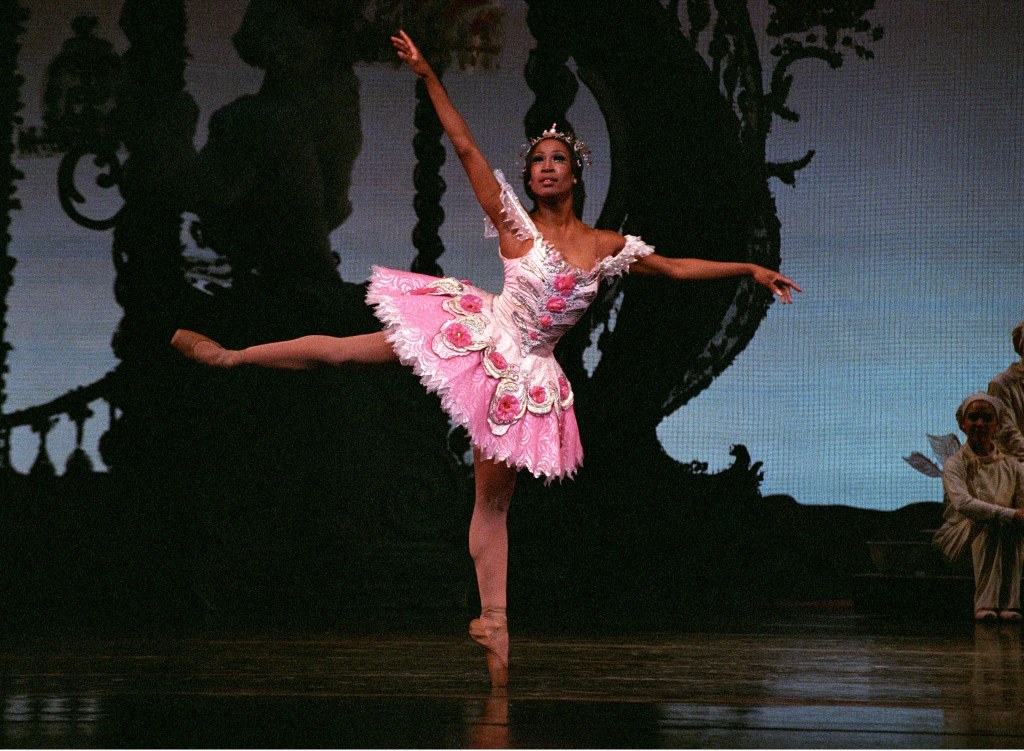
Former Houston Ballet Principal Lauren Anderson as the Sugar Plum Fairy in Ben Stevenson’s The Nutcracker / Photo by Jim Caldwell (2005), courtesy of Houston Ballet
 

Houston Ballet has announced the company’s first endowed scholarship to be named for a dancer.

Established in honor of the company’s first African American Principal Dancer, the new Lauren Anderson Young Dancer Scholarship Fund will provide yearly scholarships “for up to four underrepresented artists who aspire to be professional ballet dancers and show great promise in their physical and artistic abilities,” according to a press release.

The scholarships will cover full annual tuition costs at Houston Ballet Academy and aim to help develop the next generation of elite ballet dancers.

The company says that incoming and current students in the Academy’s Professional Program may be considered for the award, and the first scholarship will be presented at the Academy Spring Showcase in late April 2022.

Former Houston Ballet Principals Lauren Anderson as Kitri and Carlos Acosta as Bastilio in Ben Stevenson’s Don Quixote / Photo by Geoff Winningham (1995), courtesy of Houston Ballet.

Native Houstonian Lauren Anderson danced with Houston Ballet from 1983 to 2006, during which she became the first African American promoted to Principal Dancer at the company in 1990. She remains one of the few African American ballerinas to hold the highest rank at a major U.S. ballet company.

Anderson’s critically acclaimed 23-year career with Houston Ballet spanned performances of leading roles in all the great classical ballets, as well as roles created for her including Ben Stevenson’s Cleopatra – though her deep relationship with the company goes back to when she began training there at age 7.

“Fifty years ago, I started at the Houston Ballet Academy on scholarship, which gave me the opportunity to begin my journey towards becoming a professional dancer,” said Anderson in a statement.

“To now have a scholarship named after me means everything,” she continued. “Houston Ballet is the foundation of my life … It’s where my dreams came true, and I am so proud that this scholarship will give the next generation of aspiring young dancers from underrepresented communities an opportunity to reach further than they ever thought they could go.”

Houston Ballet Education and Community Engagement Associate Director Lauren Anderson guest teaching students during the Academy Summer Intensive Program / Photo by Chenay Newton (2019), courtesy of Houston Ballet

The Lauren Anderson Young Dancer Scholarship becomes the Academy’s 9th endowed scholarship. Information about donating to the fund can be found here.

“It is our mission that our student body reflects the city of Houston, the most diverse city in the country. This will allow us to reward deserving students based on their merit to receive the highest level of training,” said Jennifer Sommers, Houston Ballet Academy director, in a statement.

Lauren Anderson continues to serve the Houston community through master classes and lectures in her role as the Academy’s Associate Director of Education and Community Engagement, and she continues to inspire the ballet world and beyond.

A Lauren Anderson Scholarship was also established at the Ruth Page Center for the Arts in Chicago in May 2021.

Anderson’s life story has been adapted into a World Premiere stage work, Plumshuga: The Rise of Lauren Anderson, by Deborah DEEP Mouton, with music by Jasmine Barnes, choreography by Stanton Welch and Harrison Guy, and featuring Houston Ballet dancers. Plumshuga will debut in October 2022 at Stages.

A new award supports first-time Latino authors of children’s literature

Josefina’s Habichuelas / Las habichuelas de Josefina by Jasminne Mendez won the 2021 Salinas de Alba Award for children’s picture books. Arte Público Press has just launched the Reyes-Olivas Award for first-time Latino writers of children’s literature.

In 2020, according to the Cooperative Children’s Book Center, only 228 (or 7%) of 3,299 published children’s books were written by Latinos and only 200 (or 6%) centered Latino characters.

Arte Público Press – the nation’s oldest and largest Hispanic publisher in the U.S. based at the University of Houston – is launching a new $5,000 award that aims to inspire and support more first-time Latino authors of books for children and teens.

“There just are not enough writers producing works for and about Latino children. In particular, the Reyes-Olivas Award is squarely targeting those who have written for adults to encourage them to write for young adults and children,” said Dr. Nicolás Kanellos, founder and director of Arte Público Press.

Studies suggest a link between representation in literature and literacy rates, indicating that more inclusive children’s literature could lead to more successful reading skills and academic outcomes.

“Latino kids need to see themselves and their families in books, which will contribute to positive feelings about their identity,” said Dr. Kanellos. “Reading books by Hispanic authors will help kids believe they are important—in school and society—and will hopefully lead to increased educational achievement.”

The Reyes-Olivas Award for Best First Book of Latino Children’s and Young Adult Literature will be given annually, starting in the fall of 2022. In addition to the prize money, the award includes publication of the book, an advance, and future royalties.

In an email to Houston Arts Journal, Arte Público Press described the selection process:

“We’ll send calls for submission multiple times throughout the year … we are looking for books that authentically represent the lives of Hispanic children. So we’re not looking for re-tellings of Grimms fairy tales or books about life in Argentina or Spain. We want our books to speak to Hispanic kids living here, which means we might publish books about migration from Central America (given the influx of children and families from the region and the issue of unaccompanied minors, etc.), for instance. Our award committee will review appropriate submissions year-round and will make a decision by August for publication later in the year.”

The award is named for Dr. Augustina “Tina” Reyes and Dr. Michael Olivas, both retired University of Houston professors, who donated $80,000 to create an endowment for the prize.

“At a time when politics have brought libraries and teachers under fire, it is more important than ever to step in and encourage support for reading education, including the wide array of children’s literature by and from our community,” Reyes and Olivas said in a statement.

The couple say they plan to raise an additional $45,000 to ensure that the $5,000 award can be given each year using endowment interest.

The Reyes-Olivas Award is among the latest Houston-based efforts to support writers of color, including a new BIPOC Book Fest set to take place this spring.

In 2020, Arte Público Press also established the Salinas de Alba Award for Latino Children’s Literature, a $5,000 prize that is given to authors of children’s picture books.

Thousands of rare photos from Prairie View A&M will be digitized as part of a Getty Images HBCU grant

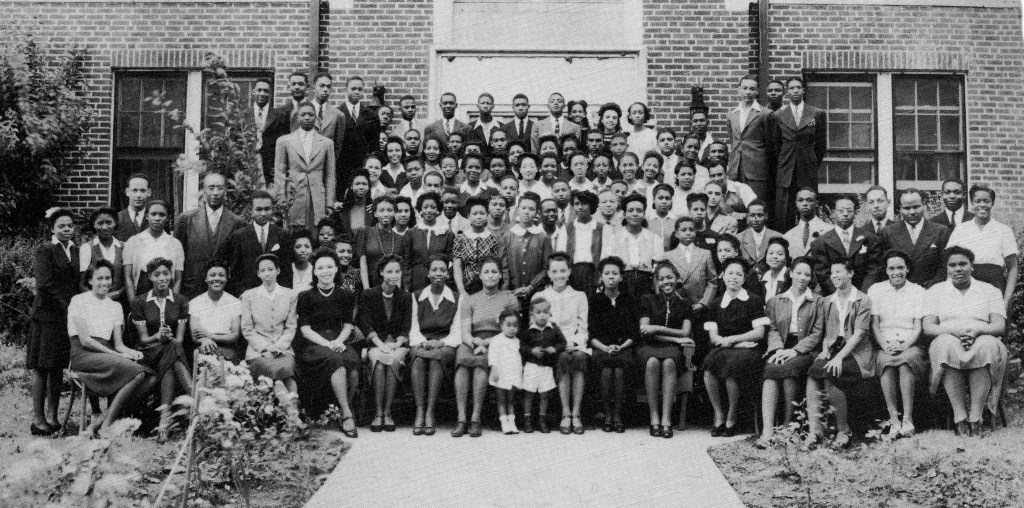
Photo of the Grandchildren’s Club from the 1943 Panther yearbook / Courtesy of Prairie View A&M University

A new Getty Images Photo Archives Grant for Historically Black Colleges and Universities aims to honor and amplify the legacy, stories, and contributions of HBCUs to American history.

Prairie View A&M University is one of four inaugural recipients selected to receive a combined $500,000 to support the digitization of up to 200,000 archival images this year.

Other grant winners are Jackson State University (Jackson, Mississippi), North Carolina Central University (Durham, North Carolina), and Claflin University (Orangeburg, South Carolina).

Roughly 50,000 rarely seen photographs from Prairie View A&M’s library will be preserved, restored, and digitized with funding from the grant. Photo subjects include stories of migration movements, voting rights, housing displacement, injustices, Black women in politics, and Black family life within Texas communities, according to a press release.

The collection also preserves the legacy of Elnora Teal and the Teal Portrait Studio, an influential African-American photography studio established in 1919 in Houston. It operated for decades in the city’s Third, Fourth, and Fifth Wards. Elnora Teal was one of only 100 Black female photographers in the country at the time, as documented by the 1920 U.S. Census.

Science class, undated photo / Courtesy of Prairie View A&M University

“Getty Images is proud to partner with archivists at each of the four HBCUs to uncover rarely seen photographs of Black culture and ensure these historical artifacts are preserved and accessible to storytellers around the world,” said Cassandra Illidge, VP of Partnerships at Getty Images, in a statement.

“This year’s Grant is just the beginning of our work helping to preserve HBCUs history and our commitment to the HBCU community,” Illidge said.

The HBCU Photo Collection is now online and available for licensing, with thousands of images to be added throughout 2022.

Other aspects of the grant:

  • Prairie View A&M archivists and librarians (and each of the respective HBCU recipients) will work alongside Getty Images and the post-production agency Adnet Global in the digitization of its collection.
  • HBCUs will retain copyright of their photos. 
  • Getty Images will provide funding and mentoring to support HBCU students interested in becoming involved in the digitization process.  
  • Revenue from the photos will be distributed to HBCUs: 50% will go to Grant recipients; 30% will go to a Scholarship Fund for HBCU students, with scholarships becoming available in 2022; and the remaining 20% will be reinvested to fund the Getty Images Photo Archive Grants for HBCUs each year.

Read more on the subject of African American photography in Texas:

Did you know there is a Texas African American Photography Archive?

Houston’s only festival for high school playwrights is accepting submissions

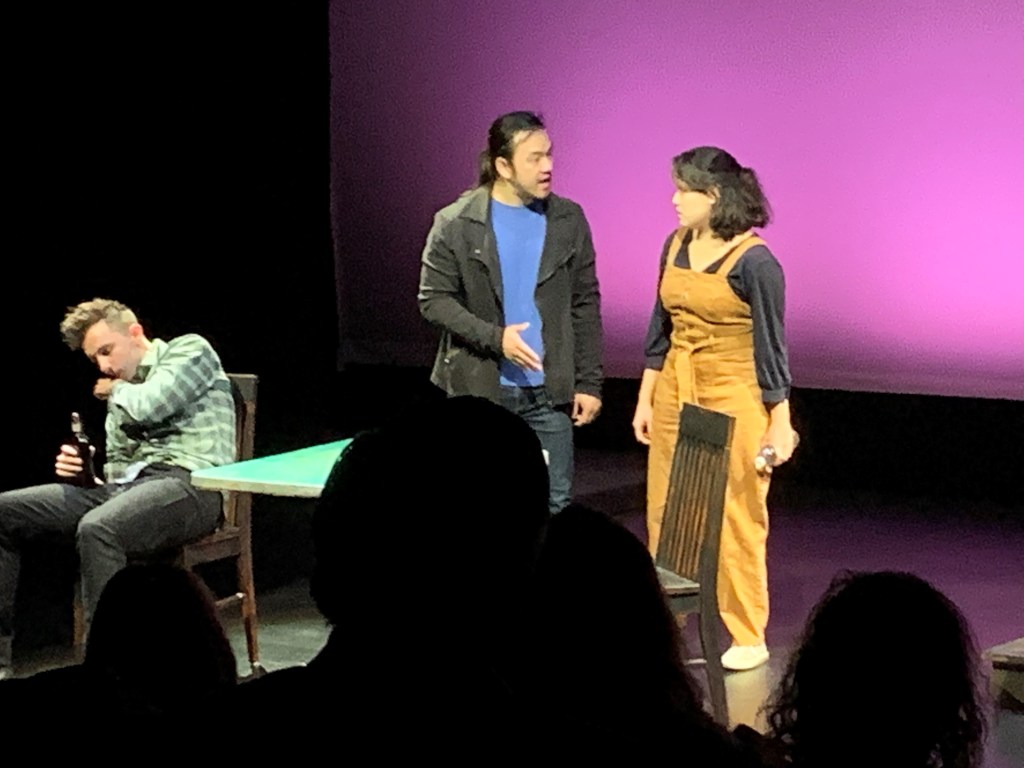
“Keep Your Head Above the Water” by 2020 student playwright winner Rachel Iliev, directed by Christine Weems; (L-R: Justin Bernard as Jake, Chris Szeto-Joe as Quinn, Helen Rios as Shalla) / photo courtesy of Dirt Dogs Theatre Co.

Founded in 2015, Dirt Dogs Theatre Company “collaborates with other Houston artists and playwrights to provide an opportunity for new works to be seen” – and this includes works by the next generation of aspiring playwrights.

Since 2018, the company has hosted a competition and showcase of plays by high school students. It is currently accepting submissions for its 2022 Student Playwright Festival.

The festival is open to high school seniors in the Greater Houston area, who are invited to submit previously unproduced one-act plays, up to 30 minutes in length. The deadline is February 11, 2022. Rules and application are available here.

Three to five plays will be selected to be produced by the festival on June 8, 2022 at the MATCH, with the winning playwrights in attendance as guests of honor.

Each winner will also receive a $500 scholarship and the experience of preparing their works for the stage – including mentorship by a Houston-based playwright and participation in the rehearsal process leading up to the festival.

A unique opportunity for area students, Dirt Dogs Theatre Company’s Student Playwright Festival is the only one of its kind open to high school students across the city, based on Houston Arts Journal’s review of multiple local theater organizations.

Other local efforts to engage teens indicate an active youth theater scene overall in Houston, with an emphasis on performance – including youth training programs offered by the Alley Theatre, Ensemble Theatre, Main Street Theater, Stages, and Theater Under The Stars. The University of Houston’s School of Theatre and Dance also produces an annual 10-Minute Play Festival that showcases new works by college playwrights in its B.F.A. program.

Houston Arts Journal reached out to Trevor B. Cone, Executive Director of Dirt Dogs Theatre Company, for the following interview to find out more about the impact of its Student Playwright Festival (SPF).

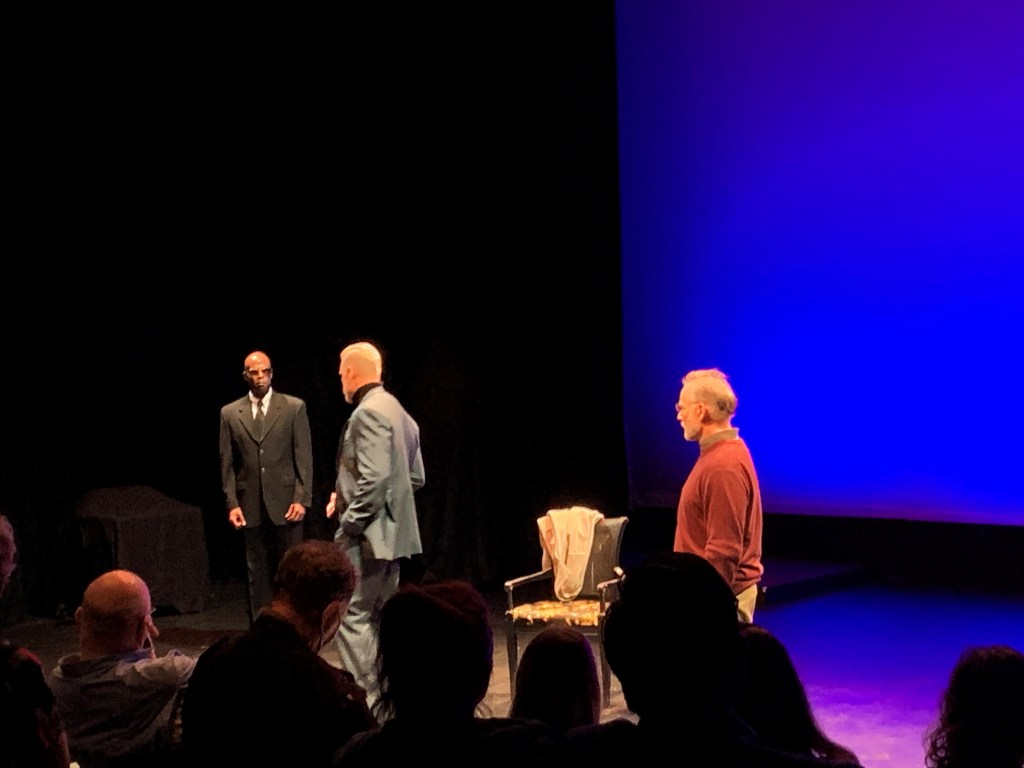
“The New World” by 2020 student playwright winner Jack A. Mowry, directed by Trevor B. Cone; (L-R: Todd Thigpen as Guard, Jeff Featherston as Walter Dunningham, Allen Dorris, Jr. as Jeff Drake) / photo courtesy of Dirt Dogs Theatre Co.

Is there any story behind the festival? How and why did you start it?

Our younger daughter, Sydney, took a playwriting class at her high school in the spring of 2017. Their semester concluded with each of the students in the class producing their plays. The performances were done over a weekend and were mainly attended by friends and family.

We figured there were other high school students who were also playwrights that maybe didn’t have an opportunity to see their work go from the page to the stage but would really benefit from it. After some brainstorming with our artists in residence, Doug Williams and Donna McKenzie, the framework for the Student Playwright Festival was built and then launched in 2018. 

The first two festivals took place in June 2018 and 2019. The 2020 SPF was postponed due to COVID and was held in November in 2021.

How many student plays have you produced through the festival so far?  Are there any particular plays or experiences of mentoring past winners that stand out?

Each SPF has featured three plays, so in total we have produced nine. The mentors have each formed lasting relationships with one or more of the students they have mentored that have extended beyond the festival into their college and adult lives. We continue to hear stories of other projects their students have worked on because of the connections established by the SPF.

How is the scholarship funded?

So far, we have been very fortunate to have the scholarships underwritten by a mixture of individual, corporate, and foundation gifts. Our first SPF scholarships were funded by the Salners Family Foundation. Since then, we have been sponsored by Carrabba’s Original, and this year we received funding from the J. Flowers Health Institute.

Have any past winners gone on to study theater or playwrighting, or go on to produce more plays?

Yes, one of the students in the first festival studied at Brandeis and continues to write and design. Another is currently studying theatre at Emerson College and another is finishing his college career this spring at California Institute of the Arts.

How have you seen the festival impact students and the community?  In these complicated pandemic times, when many companies are struggling to present a full season amidst COVID, why is it important to you to continue to offer this opportunity to students?

The festival has been extremely fulfilling to the playwrights, the mentors, and Dirt Dogs Theatre Co. For the playwrights, the SPF is a validation of their talent and a celebration of their creativity and dedication to their craft. As 2018 SPF winner Carter Prentiss told us, “Seeing my show go from the moments in my mind to the words on a page and finally to actions on stage was nothing short of amazing.”

For some, the SPF exposed them to how a play is produced and all that goes into it. Another 2018 SPF winner Addison Antonoff said, “Being able to help a show go from a draft to full production has given me the ability to work in different areas of theatre I didn’t have previous experience in because I was able to see not just the work of those areas, but how they fit together in a show.” For the mentors and Dirt Dogs, the SPF allows us to foster the talents of the next generation of theatre makers. 

Regarding the company in general, what would you like people to know about how the pandemic has impacted Dirt Dogs Theatre Company?

We were mid-way through Season 4 when COVID-19 reached the United States. Our production of The Dead Eye Boy completed its run on March 7, 2020. The city shut down the following week. We were unable to complete Season 4, and in Season 5 we produced a streaming production of Anna Deavere Smith’s Twilight: Los Angeles, 1992. Originally produced by the playwright as a one-woman show with Ms. Smith performing over 30 roles, Dirt Dogs instead chose to cast 32 local actors, and we rehearsed and filmed them under strict socially distanced guidelines. The cinematic theatrical production was made available on demand during the month of November 2020 and again in February 2021.

We launched our Season 6 in October 2021 with a production of The Revolutionists by Lauren Gunderson. In December, we continued our ULNEASHED series, which debuted in January 2020 with Jeff Goode’s The Eight: Reindeer Monologues. Both shows were well attended, showing us that people are excited about the return of live theatre.

Rehearsals have begun for our restaging of A Steady Rain, which we originally produced as the first show of our premiere season in 2016. We are hopeful that the current omicron surge will subside enough for our audiences to come back to MATCH when we open on February 18.

As Houston theater veteran, do you know of any other local student playwriting festivals or similar opportunities?

We are not aware of any other local or regional playwriting festivals that are specifically targeted at high school students. This is one of the reasons we decided to start the SPF. With encouragement and guidance, we hope that kids who are interested in theatre, and specifically the creation of new plays, will follow through on that urge. These kids are the future of the American theatre. Hopefully, Dirt Dogs Theatre Co. can have a positive impact on them.

NEA announces over $33 million in project funding nationally, including $1.7 million for Texas arts

Photo credit: Young Audiences of Houston / Facebook

The National Endowment for the Arts is awarding 1,498 grants totaling nearly $33.2 million for its first round of funding for fiscal year 2022.

Of that amount, $1,746,000 is going to 77 institutions in Texas, with 22 Houston arts organizations receiving $632,000.

The overall funding spans every state, Washington D.C., and Puerto Rico. The types of grants awarded include Grants for Arts Projects, which represent 15 artistic disciplines; Challenge America grants, “for projects that extend the reach of the arts to populations that have limited access to the arts due to geography, ethnicity, economics, or disability”; Literature Fellowships in creative writing and translation; and Arts Research grants.

“These National Endowment for the Arts grants underscore the resilience of our nation’s artists and arts organizations, will support efforts to provide access to the arts, and rebuild the creative economy,” said Ann Eilers, NEA Acting Chair, in a press release.

“The supported projects demonstrate how the arts are a source of strength and well-being for communities and individuals, and can open doors to conversations that address complex issues of our time,” Eilers said.

Among local grantees, Young Audiences of Houston will receive $50,000 for its Neighborhoods, Identity, and Diversity Project, which aims to increase arts access and equity. By providing free programs across 10 communities, the project works to amplify youth voices, infuse local cultures and traditions into arts-based learning, and collaborate with teaching artists and schools.

“We look forward to sharing over the next year the progress of this exciting project, unique to Houston and the communities that create our region’s vibrancy,” said Mary Mettenbrink, Young Audiences of Houston’s Executive Director, in a statement. “This project will support Acres Homes, Alief-Westwood, Fort Bend Houston, Gulfton, Kashmere Gardens, Magnolia-Park Manchester, Near Northside, Second Ward, Sunnyside, and Third Ward.”

Houston’s Discovery Green Conservancy will receive a $15,000 NEA grant in support of its project, Tejas Got Soul: Celebrating Houston’s Tejano Roots Music Legacy.

Initiated by East End residents Pat Jasper, Nick Gaitan, Isaac Rodriguez, Robert Rodriguez, and Angel Quesada, the project includes 3 free concerts in fall 2022 that feature traditional music genres popular in the Chicano community, from orquesta to conjunto and Tejano to Brown-Eyed Soul. There will also be panel discussions about the history of the local Chicano music scene and a social media campaign to add historical and cultural context about the music, musicians, and the community.

“Part of Discovery Green Conservancy’s mission is to shine a light on the diversity of traditions that exist in Houston,” said Barry Mandel, Discovery Green Conservancy President, in a statement. “The Conservancy is very proud to work with talented Houstonians to present these concerts and is very grateful for the National Endowment of Arts support.”

A full state-by-state listing of grants is available here.

A full list of Houston grantees follows:

Alley Theatre
$20,000
Grants for Arts Projects – Theater

Arts Connect Houston
$100,000
Grants for Arts Projects – Arts Education

Aurora Picture Show (aka Aurora)
$15,000
Grants for Arts Projects – Media Arts

Da Camera Society of Texas (aka Da Camera chamber music & jazz)
$25,000
Grants for Arts Projects – Music

Discovery Green Conservancy (aka Discovery Green)
$15,000
Grants for Arts Projects – Folk & Traditional Arts

FotoFest, Inc.
$25,000
Grants for Arts Projects – Visual Arts

Guez, Julia
$10,000
Literature Fellowships: Translation Projects – Literary Arts

Gulf Coast: A Journal of Literature & Fine Arts (aka Gulf Coast)
$15,000
Grants for Arts Projects – Literary Arts

Houston Architecture Foundation (aka Architecture Center Houston)
$12,000
Grants for Arts Projects – Design

Houston Arts Alliance (aka HAA)
$35,000
Grants for Arts Projects – Local Arts Agencies

Houston Cinema Arts Society
$20,000
Grants for Arts Projects – Media Arts

Houston Grand Opera Association, Inc.
$65,000
Grants for Arts Projects – Opera

Houston Symphony Society (aka Houston Symphony)
$15,000
Grants for Arts Projects – Music

Musiqa Inc.
$10,000
Grants for Arts Projects – Music

Nameless Sound
$20,000
Grants for Arts Projects – Music

Open Dance Project Inc.
$10,000
Grants for Arts Projects – Dance

Rothko Chapel
$35,000
Grants for Arts Projects – Presenting & Multidisciplinary Works

Society for the Performing Arts (aka SPA)
$35,000
Grants for Arts Projects – Presenting & Multidisciplinary Works

Theatre Under The Stars, Inc.
$10,000
Grants for Arts Projects – Musical Theater

University of Houston (on behalf of Arte Publico Press)
$60,000
Grants for Arts Projects – Literary Arts

University of Houston (on behalf of Blaffer Art Museum)
$30,000
Grants for Arts Projects – Museums

Young Audiences Inc of Houston (aka Houston Arts Partners)
$50,000
Grants for Arts Projects – Arts Education

Collector loans Stradivarius violin to the Shepherd School of Music

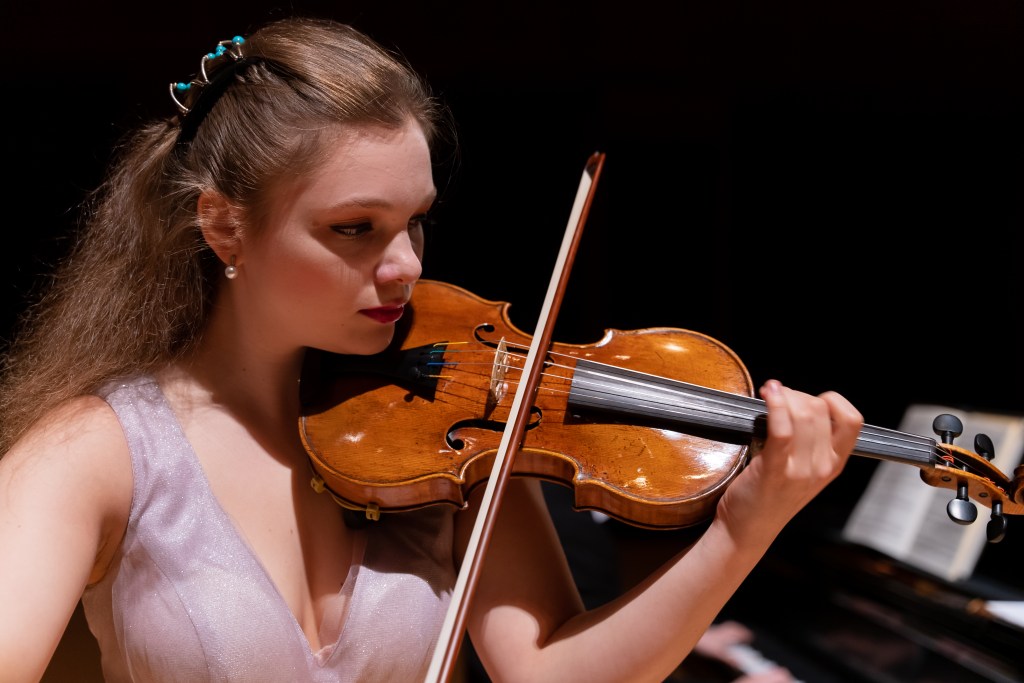
Clara Saitkoulov plays the 1687 Kubelik Stradivarius violin. Photo credit: Jeff Fitlow/Rice Universit

When Clara Saitkoulov played her first notes on a rare Stradivarius violin, she said something special happened.

“I just put my bow on the violin, you know, and tried it for 15 seconds. And I just thought, Wow, this is something amazing,” she said in a video. “As I was playing, you know, my heart started to speed up. It’s like when you fall in love.”

Saitkoulov, a graduate student, will be the first student at Rice University’s Shepherd School of Music to use the 1687 Kubelik Stradivarius violin, newly on loan to the school by its owner Peter Naimoli.

Naimoli, a Texas-based collector and an amateur musician, was interested in lending the violin to a music school, so that the instrument would not just sit on a shelf but could be used for music-making to the benefit of students.

He chose Rice, following encouragement from his friend, Shepherd School alumnus Geoffrey Herd, which led to further talks with violin professor Paul Kantor and former dean Robert Yekovich.

Clara Saitkoulov performs “Jingle Bells” on the 1687 Kubelik Stradivarius with James Palmer, pianist and doctoral student, and Alex Garde, percussionist and graduate student.

Prized for their quality of sound, physical beauty, and construction, violins by the legendary 17th and 18th century craftsman Antonio Stradivari are considered some of the finest string instruments ever created.

It is estimated that Stradivari produced around 1,100 instruments, including violins, violas, cellos, guitars, and harps. Only around 650 instruments survive today.

Though Rice University is not publicly sharing the value of the 1687 Kubelik, Stradivarius violins range in value from hundreds of thousands to several million.

“The pinnacle of incredible, old instruments – Italian instruments – is of course Stradivari,” said Matthew Loden, Dean of the Shepherd School, in a video.

“The fact that we actually have the opportunity for our students to get their hands on one of these instruments, and to perform, live with it, practice on it, concertize on it, that’s just extraordinary. Those kinds of opportunities are incredibly rare,” said Loden.

The Stradivarius will be on loan indefinitely to the Shepherd School, where violin faculty will choose a different student each year to use the instrument.

Saitkoulov was selected “because her truly remarkable talent, skill, and dedication to her craft stand out even among the brightest talent,” said Rice University in an email.

A winner of the 2021 Shepherd School Concerto Competition, Saitkoulov will perform Karol Szymanowski’s Violin Concerto No. 1, Op. 35 on the instrument with the Shepherd School Symphony Orchestra on April 1, 2022 in Stude Concert Hall.

Saitkoulov is a student of violin professor, Cho-Liang Lin, who performs on the 1715 “Titian” Stradivarius and who remarked that a special instrument empowers a performer onstage not just artistically but also mentally.

“When you have a great Stradivarius violin in your hand, it’s an instant boost of confidence, that extra something that no studio lessons or practicing can ever deliver,” said Lin in a press release.

“And when you hold it and you start to make a sound with it, it’s different,” he said. “And it’s magic. I don’t know how else to describe it, except it’s like the biggest boost of confidence any performer can have.”

Shepherd School of Music welcomes a new flute professor

Marianne Gedigian / courtesy of Rice University

Rice University’s Shepherd School of Music has appointed flutist Marianne Gedigian to the faculty. She begins her official role after the next academic year, starting July 1, 2023.

Gedigian will follow in the footsteps of Leone Buyse, her former mentor and longtime Shepherd School flute professor, after she retires at the end of the 2022-2023 year.

In a press release, Buyse described Gedigian as “an extremely perceptive musician, a virtuoso performer, and an empathetic teacher with an uncanny ability to analyze problems and inspire solutions.”

“We have known each other since her days as a student in Boston,” said Buyse. “It has been a great delight for me to follow the evolution of her career as an orchestral musician, soloist, chamber music player, and professor.”

An international concert flutist, recording artist, and noted educator, Gedigian is currently a professor of flute at the University of Texas at Austin’s Butler School of Music, where she has taught since 2004.

Gedigian established her career in Boston, earning her bachelor’s degree in flute performance at Boston University and later joining the faculty of BU as well as the Boston Conservatory. During her Boston days, she met Buyse, with whom she studied at the New England Conservatory.

While Buyse would join Rice’s Shepherd School in the mid-1990s, Gedigian would continue her concert career for a while longer in Boston, performing for more than a decade with the Boston Symphony Orchestra. She also served as principal flute with the city’s major arts organizations, including the Boston Pops, Opera Company of Boston, Musica Viva, Boston Chamber Music Society, and the Boston Ballet Orchestra. 

Her solo performances, recitals, and master classes have taken her to Australia, Armenia, Canada, China, England, Japan, and throughout Europe.

In addition, Gedigian has performed on several John Williams movie scores, including Saving Private Ryan and Schindler’s List, and has numerous recording credits on major labels.

During the 2022-2023 school year, leading up to her formal appointment, Gedigian will reunite with Buyse as they work together to coach students and prepare them for the change in flute studio leadership.

“Leone is a source of inspiration as my mentor and in bridging the worlds of performer to artist-faculty,” Gedigian said in a statement. “Our close collegial relationship will prove invaluable in facilitating a seamless transition for the students.”

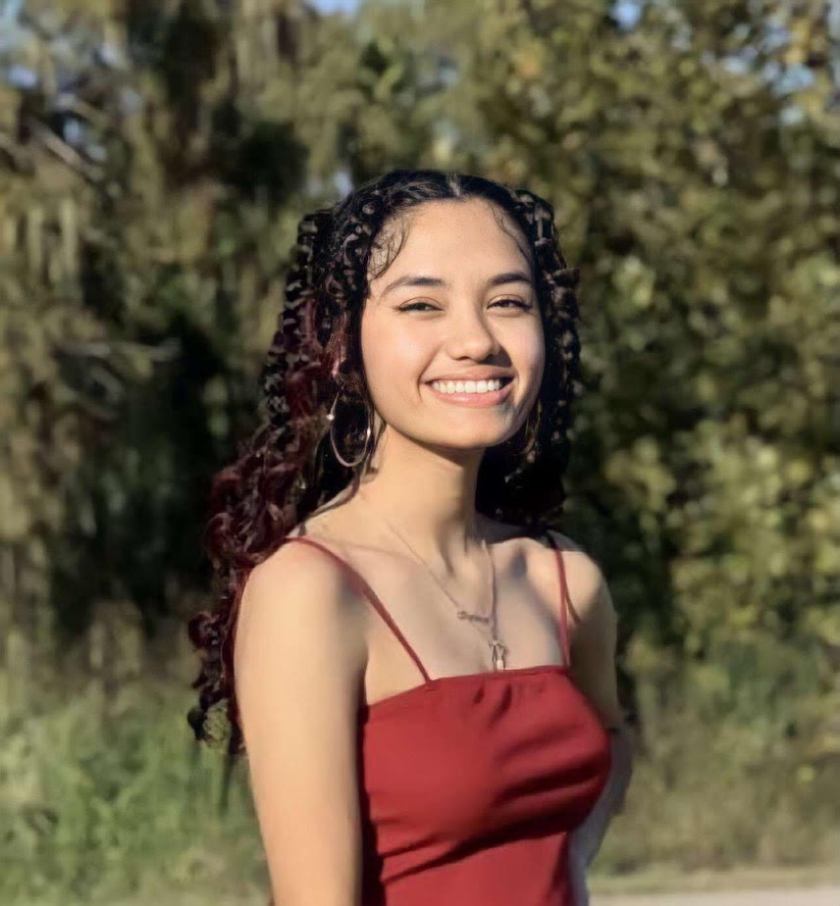
Meet Avalon Hogans, Houston Youth Poet Laureate

Avalon Hogans / Courtesy of Writers in the Schools

Writer, activist, and senior at Kinder High School for the Performing and Visual Arts, Avalon Hogans was recently appointed Houston’s sixth Youth Poet Laureate. She will serve from fall 2021 – fall 2022 and receive a $1000 scholarship.

During her tenure, Hogans will create and implement a civic engagement project. Past youth poet laureate projects have included reading series, workshops, book drives, and podcasts. Hogans will work with Houston Poet Laureate Emanuelee “Outspoken” Bean to develop her own project to serve the community. The position also aims to empower young people and to address a social issue through poetry.

Houston has the longest-running citywide youth poet laureate program in Texas. Since 2016, the city has appointed a teen poet in the position, which is sponsored by Writers in the Schools, the Mayor’s Office of Cultural Affairs, and Houston Public Library. The adult counterpart, the position of Houston Poet Laureate, was created in 2013.

Houston Arts Journal reached out to Avalon Hogans for the following interview and permission to print her poem “Big Red Road.”

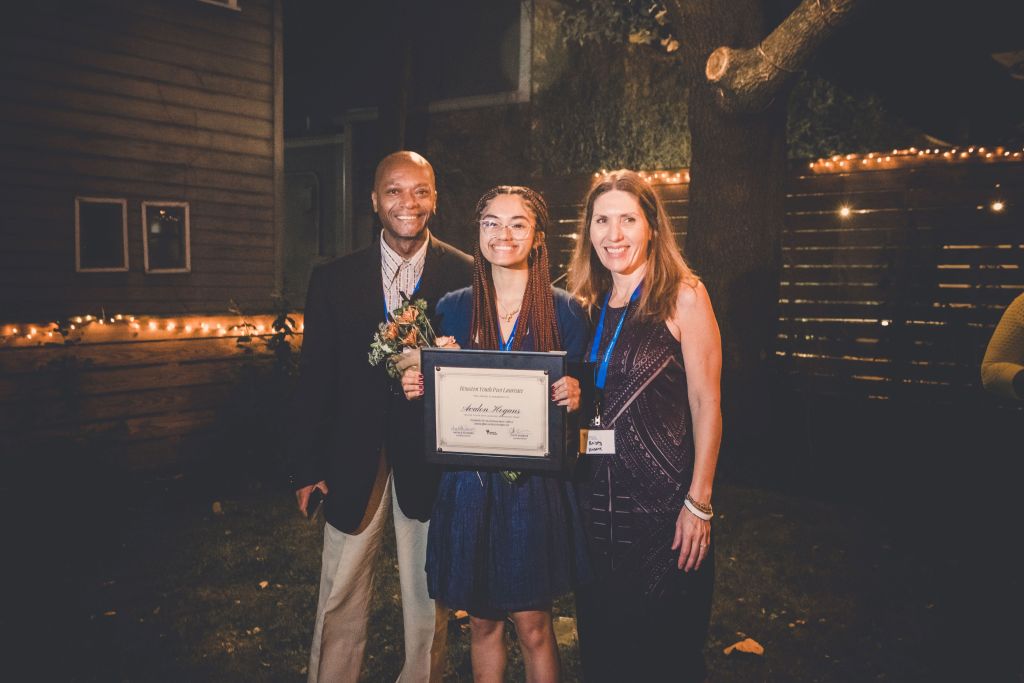
Avalon Hogans with her parents, Marvin and Bristy Hogans, at the Houston Youth Poet Laureate ceremony, November 17, 2021 at Writers in the Schools / photo by Bhavin Misra

When, and how, did you fall in love with poetry?

I fell in love with poetry in middle school. Back then, I would use poetry as an outlet for my angsty emotions. I remember in eighth grade, I got really into reading verse novels like Brown Girl Dreaming by Jacqueline Woodson and Solo by Kwame Alexander. But it was The Poet X by Elizabeth Acevedo that I was truly in love with. At 14 years old, that novel heavily influenced my writing style and my love for writing.

I remember I started writing poems inspired by Acevedo’s, and I would share them on my Instagram at the time. My friends would reshare my poems and give me positive feedback. It was such an amazing and affirming feeling as a young aspiring poet to evoke feelings from others using my writing, even if it was just on a small scale.

How would you describe the kind of poems you write and themes you’re interested in?

I would describe the kind of poems I write as authoritative, identity-based, and charged. Most of the poetry I choose to share and/or perform center themes of Black pride, womanism, anti-racism, and social change. 

How does a poem begin for you? Do you have any writing rituals?

I don’t have any specific writing rituals. My poems typically begin with a brain dump on a blank Google Docs page or in my notebook. I prefer to write a poem all at once with minimal distractions. Usually, I have Thesaurus.com and my Kendrick Lamar playlist on deck in case I’m needing some extra inspiration.

What are your plans as Houston Youth Poet Laureate?  Will you have a specific project?

As Houston Youth Poet Laureate, I’m currently in the running for Regional Youth Poet Laureate and I’m planning out my service project. So yes, I will have a project. I’m very excited to work on it. I plan on centering it around teaching anti-bias and anti-racist practices. I love teaching. I’ve taught middle schoolers and elementary students creative writing and artivism through volunteer programs at my school, and it has always left me feeling fulfilled. I just want to be able to give as many people as possible the resources, awareness, and courage it takes to be an artist, ally and/or activist.

Avalon Hogans performing at the Houston Youth Poet Laureate ceremony / photo by Bhavin Misra

Why do you think poetry is important – why should people read or write it? 

Poetry is important because it unifies people through emotion and experience. Spoken word poetry has the power to create change because it commands and demands ears. Written poetry has the power to create change because it requires patience and consideration. This art form makes people listen and think. People should read poetry to listen to new ideas, and people should write poetry to share their own.

Has the pandemic impacted you as poet?

The pandemic has taught me how to be patient and flexible with sharing my craft. While it was uncomfortable performing spoken word to a mass of silent, staring video squares, I was able to adapt. I collaborated with many local advocacy groups for virtual fundraisers, info sessions, and rallies. I taught writing skills to younger students virtually. I had more time to read. During the pandemic, I wrote a lot of poems that I couldn’t perform or workshop, but I believe that taught me the significance of self-critiquing, revision, and it gave me time to plan ahead for future live readings.

Regarding “Big Red Road,” could you tell me a little bit about what inspired this poem?  If there is a story behind it, I’d love to hear.

I wrote “BIG RED ROAD” in June of 2020 during the height of the Black Lives Matter movement. This was a time when George Floyd’s name was trending, and protests were occurring in most major cities. I felt compelled to write this piece as an attempt to express my feelings of grief and anger. A friend of mine helped me revise this, and I shared it on social media. I captioned this poem saying, “Red represents destruction, both good and bad. Because it takes destruction in order to rebuild. And we have a lot of rebuilding to do.”

BIG RED ROAD
By Avalon Hogans

it’s taking no peace
to know peace.

our lives are prizes
for easy prices
in their eyes.

but what they don’t know is,
our Red is coming,
and they won’t be able to catch us
after the pride stampedes.

i see Red in their vile souls;
i see Red in the streets.
big Red road where
the intersection meets.

big Red fire trucks,
big Red graffiti.
big Red anger
marching through the city.

Red eyes over blue uniforms
and the 99 sheep.

blood on my fallen
brothers and sisters.

it’s taking no peace
to know peace.

the power hungry
can’t tell right from wrong;
blinded by privilege and
deaf to kendrick songs.

but only justice can
relieve the Red away.
ignore our voices,
and Red is here to stay.

it’s taking no peace
to know peace.

loud Red static
all around the nation.
take a step back, america,
and look at your creation.