While Thew joined Houston Ballet in the 2022-2023 season as the company’s first official Associate Conductor, he was first introduced to Artistic Director Stanton Welch in 2016 during the company’s Australian tour of Welch’s Romeo and Juliet. Thew, accompanied by Orchestra Victoria, joined Ermanno Florio as a guest conductor, marking the start of his working relationship with Houston Ballet.
“I’ve had the pleasure of working with Simon previously, and I know that his expertise and passion for music will undoubtedly elevate our artistic journey and deepen the connection between the dancers and the orchestra,” said Welch in a statement.
“Julie [Kent, co-Artistic Director] and I look forward to having the Houston Ballet Orchestra under his baton as we enter the next era,” Welch said.
Before working with Houston Ballet, Thew was a regular conductor with The Australian Ballet between 2013 and 2016. He also served as The Australian Ballet’s assistant conductor from 2017 to mid-2022. In addition, he has guest conducted the English National Ballet and Birmingham Royal Ballet.
Earning a Master of Music Performance, with a major in conducting, from the Sydney Conservatorium of Music, Thew worked with The Australian Opera and Ballet Orchestra (now Opera Australia Orchestra) shortly after graduation—an experience that was “instrumental in his falling in love with dance as an art form, and its relationship with music,” according to a press release. His early musical journey began as a tuba player.
“I appreciate being in [Houston] where the arts are such a valued fabric of life and where there is also so much connection internationally. I am excited and honored to be continuing to work with this amazing company and orchestra in this new position,” said Thew in a statement.
“Working with young or early career musicians is also especially important to me,” he said. “Alongside working with established instrumentalists, composers, and conductors, I hope to continue fostering in the next generation of artists that reflect the cross-culturalism of this multinational city.”
Houston Ballet will announce a search for a new Associate Conductor at a later date.
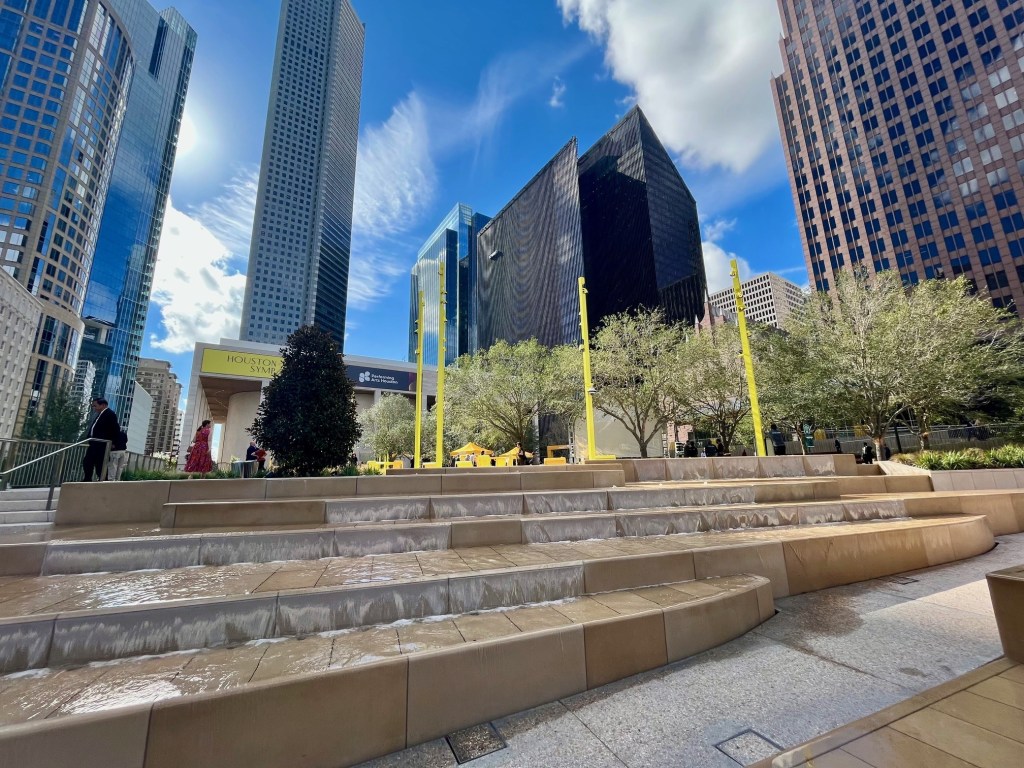
Lynn Wyatt Square / Courtesy of Houston First Corportation on X
The $26.5 million Lynn Wyatt Square for the Performing Arts, a reimagined green space and focal point of Houston’s downtown Theater District, officially opens to the public on Friday, September 22, 2023.
During opening weekend, the park will host free lawn games and live entertainment, including an interactive experience called “Bees” created by the Australia-based Polyglot Theatre.
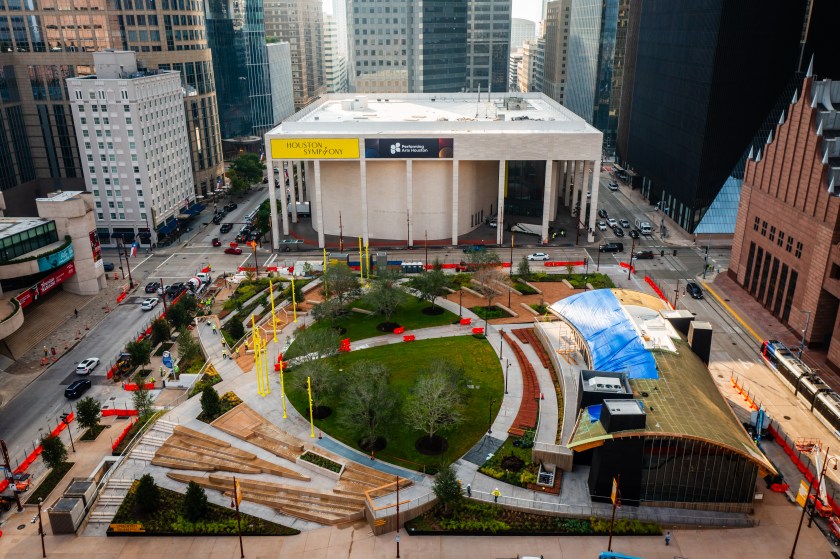
Bordered by Jones Hall, Alley Theatre, and Bayou Place—and adjacent to the Wortham Theater Center and only a few blocks away from the Hobby Center for the Performing Arts—Lynn Wyatt Square will aim to enhance the experience of patrons and pedestrians in downtown Houston, as well as contribute to the cultural landscape. The new square features a performance lawn for free concerts and programs, a cascading fountain, gardens, trees, lighting and sound elements, a space for a future restaurant, and mini murals on traffic boxes created by Anat Ronen and Jessica Guerra (Guerra Girl).
Lynn Wyatt Square / Courtesy of Houston First Corporation on X
“This is a game changer for downtown Houston. I am so excited to see this square come to life as a public space that connects the arts and, more importantly, connects people to the arts,” said Mayor Sylvester Turner in a statement.
While owned by the city, Lynn Wyatt Square is managed by Houston First Corporation, which will maintain and operate the park, as well as oversee its year-round programming in collaboration with local arts partners and stakeholders, according to a press release.
Named after philanthropist Lynn Wyatt, who announced a donation of $10 million toward the project in 2019, the Square is a major renovation and renaming of the former Jones Plaza, which was constructed in 1966.
Lynn Wyatt Square under construction / Courtesy of Houston First Corporation
“I love Houston, I love the arts and I absolutely love this beautiful Square. I am thrilled to support the team bringing people and the arts together in the heart of downtown,” said Wyatt in a statement. “I look forward to all the good this Square will do now and in the future for the people of this dynamic city and our world-class performing arts community.”
In addition to Wyatt’s donation, the Downtown Redevelopment Authority committed $10 million; Houston First Corporation committed $5 million; and additional funding was contributed by The Elkins Foundation, The Cullen Foundation, The Fondren Foundation, The Wortham Foundation, The Herzstein Foundation, Robert and Janice McNair Foundation, Vivian L. Smith Foundation, and M.D. Anderson Foundation. The project’s funding is approximately 45% private and 55% public, according to Houston First.
Lynn Wyatt Square / Courtesy of Houston First Corporation
As Lynn Wyatt Square opens, the city’s 2023-2024 downtown performing arts season is underway—this weekend alone, Alley Theater offers its season-opening production, American Mariachi; Houston Ballet is in production with Tutu at the Wortham Center; Houston Symphony presents Broadway Blockbuster with Norm Lewis at Jones Hall; and at the Hobby Center, Ars Lyrica Houston performs the concert Fallen Angels and Performing Arts Houston presents an Evening with Isaac Mizrahi.
“Lynn Wyatt Square is such an important addition to the landscape of Houston. This project, many years in the making, shows what is possible when private philanthropy, municipal partners, and the arts join together in a shared vision,” said Hillary Hart, Chair of Theater District Houston and Executive Director of Theatre Under The Stars, in an email to Houston Arts Journal.
“Located in the heart of the Theater District it creates the perfect place for people who love the arts to connect, and those new to Houston’s thriving arts scene will be able to discover the work of the incredibly talented artists who are an integral part of this community,” said Hart.
Federico De Michelis, bass-baritone and founder of The New Song Project / Courtesy of the artist
Houston opera singer Federico De Michelis says that the genre of “song” is so broad and accessible that it’s one of the great entry points to the performing arts—and it sparked an idea for a new arts organization.
“I want to build not only a project where [composers and writers] are supported and can develop their talent, but also a community around songwriting, storytelling, performing, and experiencing the power of music, theater, and literature,” said De Michelis.
With these goals in mind, the Argentina-born bass-baritone founded The New Song Project, which will present its inaugural concert on Sunday, August 20, 7pm at The Match.
The new song project (TNSP) looks to *support composers, writers and performers* to help them create new songs that speak to our contemporary society. 🎙️🤍
At the heart of De Michelis’ love of song is his belief in the power of storytelling, along with a desire to advance the “song” genre by commissioning works that reflect contemporary society.
“TNSP looks to support composers, writers and performers by creating a space in which new forms of song, literature and performance connect with the common goal of expressing the emotions and artistic expressions of our neo contemporary society,” states The New Song Project website.
For the project’s inaugural concert, De Michelis commissioned two song cycles, which explore themes of electronic communication, artificial intelligence, and anxiety. The program also includes a performance bilingual singer/songwriter Amanda Pascali, who created the “Immigrant American Folk Project.”
Cecilia Duarte, mezzo-soprano / Ashkan Image
“These songs invite us to come in a person’s intimate space, and identify ourselves in their story,” said mezzo-soprano Cecilia Duarte, who will perform songs by Argentinian composer Lucho Guedes on the concert.
“I am excited to be part of this project because it pushes boundaries, and offers a variety of sounds and points of view into the world of new music,” she said.
***
Houston Arts Journal reached out to Federico De Michelis for the following interview about The New Song Project, his experiences in the Houston arts community, and more:
Houston Arts Journal: When, and why, did you start The New Song Project?
Federico De Michelis: I started working on the idea of The New Song Project a year ago. It took some time to give it shape, find the right partners to fund the pilot season of the project, and then of course find the right artists I wanted to work with.
I started it because I believe in the power of storytelling, and I felt there’s a lot to explore and develop. Performers need stories to tell, and TNSP aims to support those that write these stories both literally and musically.
HAJ: Based on your bio, you’ve been active in the Houston arts community for many years. Could you share a little bit about your relationship to Houston and experience in the local arts? Why did you choose to stay in Houston?
FDM: I moved to Houston in 2015 to join the Opera Studio of the Houston Grand Opera. I stayed in the Studio for two seasons, and then I began my career as a freelance singer. But I never left! I’ve been living here ever since.
Houston is a great city that still has tremendous growth potential in the arts. I love the diversity, the support we have from a very strong community of donors, the sports scene (as most Argentines, I can’t be too far away from a soccer pitch) and of course, the food! I met my wife here as well, and we are happy here. Now, having founded a new arts organization in town I feel an even bigger sense of belonging, and I want to help the development of the city’s cultural landscape.
HAJ: Were you trying to address a particular need in the community by creating The New Song Project?
FDM: A key part of this project is working on generating opportunities for writers and composers. There’s very little support, if any, for composers and even less for writers that are interested in writing for the performing arts. The genre of “song” is so broad and accessible for all that I consider it one of the great entryways to all the performing arts. I want to build not only a project where these creatives are supported and can develop their talent, but also a community around songwriting, storytelling, performing, and experiencing the power of music, theater, and literature.
HAJ: You wrote on social media that “The new song project (TNSP) looks to support composers, writers and performers to help them create new songs that speak to our contemporary society.” What do you mean by “new songs that speak to our contemporary society,” and why is that important to you?
Speaking to our contemporary society for me means speaking about our language, our expressions, our problematics, our joys, our fears … but it also implies the “How” we speak about these things. That’s why a very important part of the vision I had for this project is to work with writers.
One of the weakest points in the performing arts today is the development of writers. And we cannot have a good story without finding these writers, working with them, offering them support, classes, teaching them how to write for theater, for voices, showing them around the great masterpieces of theater, opera, chamber music, etc. We, as artists, must always remember the audience doesn’t come to see us onstage, they come to see themselves. As cliché as that affirmation is, I believe it to be true.
HAJ: Your website states that one of your goals is to “Create a safe space for composers, writers, and performers to explore and expand in their craft.” Do you think safe spaces for artistic experimentation can be hard to find? How do you create that supportive, safe space for artists?
FDM: I believe it’s a very tricky time. Freedom of speech is in check. And the arts are of course affected by this as well. What I want for TNSP is to create a space where artists can speak and create without fear or boundaries.
HAJ: You also note that another goal is to “Support composers and writers by paying them for new commissions.” May I ask how you’re funded?
FDM: We’re funded by our donors. I’ve been lucky enough to meet supporters in the opera industry that believe in my artistry on stage and now trust my vision as an administrator. These individuals not only have the enormous generosity to donate to these organizations, but most importantly they have the commitment to help artists grow in their crafts and understand the importance of the arts in our society.
HAJ: Tell me about your inaugural concert. What artists have come together to perform? Were new works commissioned for this program – and if so, what kinds of stories will be told?
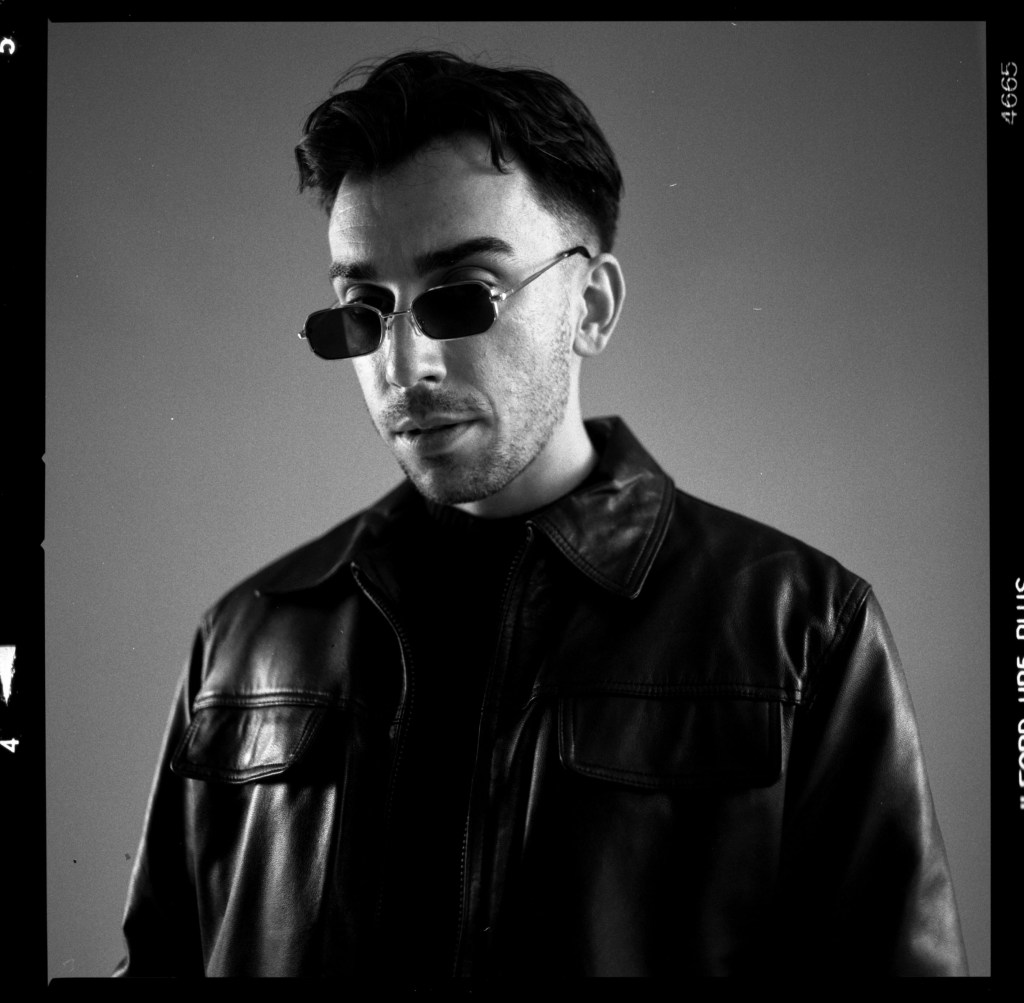
FDM: We commissioned two song cycles for our inaugural concert and season. One composed by Argentine writer, composer, and researcher Lucho Guedes, and one by producer, singer, and composer Dominic Delzompo (aka Intrnet Boyfriend – yes, without the e).
Lucho Guedes, composer and songwriter / Courtesy of Federico De Michelis
Lucho is coming all the way from Buenos Aires and is one of my favorite songwriters of today. For TNSP he wrote three pieces for guitar and voice. The common theme in his writing for this cycle of songs is our new forms of communication, text messages, video calls, etc, and how we deal with them emotionally, how we relate to each other through them. He wrote the songs in Spanish, and his language is simple and colloquial as much as it is direct and profound. He will also perform some of his older songs with another great local artist, mezzo-soprano Cecilia Duarte.
Dominic Delzompo (aka Intrnet Boyfriend), baritone and composer / Courtesy of Federico De Michelis
The second cycle is composed by Dominic. He wrote a cycle of five songs for voice and piano (I’ll be the singer for this one), in which the character is feeling anxious and lonely. While trying to find answers to his sadness, he starts a conversation, a sort of interview, a questionnaire, with an AI program. Dominic’s writing always draws me in not only because of the harmonic language he uses in his music (lots of references to French impressionism mixed with jazz in this cycle), but also because his characters always speak in a tender, human way that is so incredibly relatable.
We will also have a special performance by Amanda Pascali. Amanda is one of my favorite Houston artists. She created a genre she calls “Immigrant American Folk.” She always says this quote in her concerts, which I think is very relatable to many of us, particularly here in Houston: “too foreign for here, too foreign for home, and never enough for both.” Amanda will be one of our composers for next season, I can’t wait to see what we come up with.
I am very excited and really honored that these artists will be performing in our first season.
Amanda Pascali, singer and songwriter / Courtesy of Federico De Michelis
HAJ: Lastly, I’d like to ask about your personal love of music. Your bio states that you grew up listening to your father’s albums: “From Chick Corea to Piazzolla, from Willie Colon and Ruben Blades to Luis Alberto Spinetta and Jose Alfredo Jimenez, by the age of 13 he had a good idea of what music meant for him and the role it would play in his life.” What does music mean to you – and has it changed from childhood to adulthood?
FDM: Music is everything to me. It gave me everything I have and taught me everything I know. Like most of us, there isn’t one important moment in my life that isn’t musicalized in some way. It’s just a part of who I am.
What changed from childhood to now is the understanding that, for me, it was always the storytelling that kept me coming back. I realized that when I started in opera and began frequenting theaters and reading more about it—and understanding music from a theatrical, dramatical point of view. Even in music that doesn’t have words, the storytelling in the music and the way we are carried away and absorbed and touched by these harmonies is what I think is magical about it. Music makes a huge difference in everyone’s lives and that’s what I’m embarking on this journey.
The Texas Commission on the Arts and the Texas Cultural Trust have announced that the application cycle is now open for the 2024 class of Young Masters, described as “a joint initiative that provides exemplary Texas student artists in grades 8-11 with the financial help they need to pursue advanced study in the areas of visual arts, literary arts, music, theater, dance, musical theater, folk arts, and media arts.”
Awardees will receive grants of $5,000 per year (for up to two years, with submission of a report and update required) to fund their studies in their respective artistic fields.
Applicants must be 8th through 11th grade students who are legal U.S. residents living in Texas and participating in a school-based program, a summer institute, or a specialized course of study or receiving private lessons from a qualified professional instructor, as stated in a press release.
A panel of arts experts from across the state will review applications based on artistic excellence, level of commitment, and quality of their proposed plan of study.
“The Young Masters grant program was created as a way to recognize and support young people pursuing the dream of becoming prominent Texan artists of the next generation,” said Gary Gibbs, Texas Commission on the Arts Executive Director, in a statement.
“We look forward to receiving applications from candidates who are already demonstrating outstanding artistic ability, talent, and dedication to developing their knowledge in their chosen discipline,” he said.
According to a press release, Texas Commission on the Arts and Texas Cultural Trust have given 401 grants to 184 Young Masters, awarding more than $1.2 million to date.
In 2022, 15 Young Masters were awarded grants, including four students from the Greater Houston area (Natalie Hampton, Houston – Literary Arts; Gabi Wager Saldivar, Houston – Musical Theater; Bryant Li, Katy – Music; Aarushi Lakhi, Pearland – Dance). The 2024 grantees will represent the 12th class of Young Masters, whose roster dates back to 2002.
“We are thrilled to help these Young Masters take their education to the next level and bolster their creative training. This program opens doors to opportunities never imagined for these young artists and cultivates the Texas legends of tomorrow,” said Heidi Marquez Smith, Texas Cultural Trust Chief Executive Officer, in a statement.
Applications and more information are available here. There is no application fee.
Artists with disabilities can find information on alternative ways to apply here.
Deadline to apply is November 1, 2023. Grantees will be notified by April 1, 2024 and will be honored at a celebration in spring 2024 in Austin.
Conductor Gonzalo Farias / Courtesy of the Houston Symphony
The Houston Symphony has appointed Chilean conductor and pianist Gonzalo Farias as the orchestra’s Assistant Conductor, effective at the start of the 2023-24 season this September. Farias was the winner of an audition process, which included a video submission round and a final in-person conducting round held in May.
According to a press release, Farias’ duties will include conducting the orchestra in various programs, including Education, Family, Community, and Summer concerts, as well as covering for guest conductors and acting as assistant to Music Director Juraj Valčuha. The Houston Symphony’s previously appointed Assistant Conductor was Yue Bao.
Gonzalo Farias / Courtesy of Houston Symphony
Farias is Associate Conductor of the Kansas City Symphony and Associate Conductor of the Jacksonville Symphony. His previous positions have included Assistant Conductor of the Virginia Symphony Orchestra under JoAnn Falletta’s leadership.
As former Music Director of the Joliet Symphony Orchestra, Farias created programs that engaged Hispanic residents of the greater Chicago area “with pre-concert lectures, Latin-based repertoire, and a unique side-by-side bilingual narration of Bizet’s Carmen,” as described in his bio.
Gonzalo Farias was born in Santiago de Chile, where he began his piano studies at age five. He earned his bachelor’s degree at the P.C. University of Chile, and then continued his graduate piano studies at the New England Conservatory as a full-scholarship student of Wha-Kyung Byun and Russell Sherman. He has won first prize at the Claudio Arrau International Piano Competition and prizes at the Maria Canals and Luis Sigall Piano Competitions. As a conductor, Mr. Farias attended the University of Illinois working with Donald Schleicher, the Peabody Conservatory with Marin Alsop, worked privately with the late Otto-Werner Mueller, and studied under the guidance of Larry Rachleff for several years.
With extensive training, experience, and accolades earned in Chile, the U.S., and Europe, Farias was the recipient of the Baltimore Symphony Orchestra Conducting Fellowship for two seasons, during which he was mentored by Marin Alsop. In 2020, he was selected for the Bruno Walter National Conductor Preview, considered a significant showcase for young emerging conductors sponsored by the League of American Orchestras.
Farias’ bio states that he has a “fond love for piano, chamber, and contemporary music” and is a “passionate reader of second-order cybernetics as a way to help understand how complex systems organize, coordinate, and interconnect with one another.” In addition, he is a practitioner of Zen Buddhism.
“In other productions I have seen, she tends to be played as a cutesy, coquettish ingénue that is waiting around for a man to come and save her,” she said. “But that is simply not supported by the librettist’s text.”
In Pirates of Penzance, considered one of Gilbert and Sullivan’s funniest and most popular operettas, Mabel is the love interest of protagonist Frederic, who must serve out an apprenticeship to pirates until his 21st birthday—that is, until 21 of his Leap Year birthdays have passed, which extends his sentence by decades.
“Gilbert paints her as a fiery young woman who knows what she wants and who is not afraid to speak up and get it,” said Kenley-Miller. “From the beginning of my conception for the piece, I knew that Mabel was going to be the key to a new interpretation.”
This summer, Kenley-Miller becomes the second woman to direct the Gilbert and Sullivan Society of Houston in its 70-year history. Founded in 1952, the award-winning, Emmy-nominated company is considered to be the oldest continuously operating opera company in Houston.
A veteran director of opera and musical theater on stage and in film, Kenley-Miller received her DMA from the University of Houston and is Assistant Professor and Opera Stage Director at The University of Oklahoma. She is also the founder of Intersection Arts, an organization which explores the convergence of the arts and current social and cultural issues.
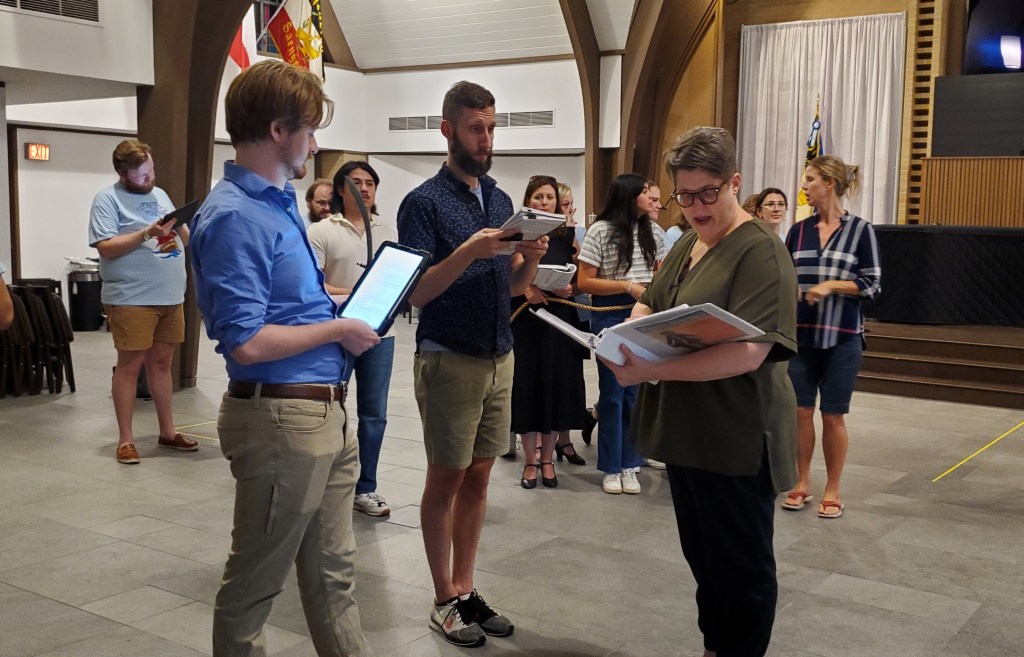
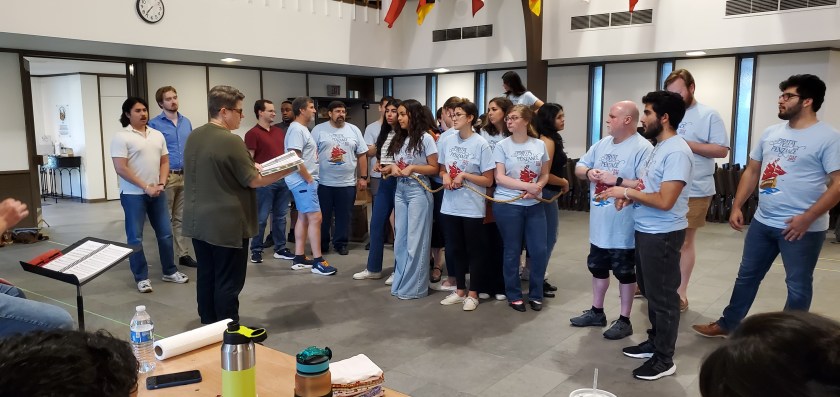
Sean Holshouser (Pirate King), Dennis Arrowsmith (Major General), and Nicole Kenley-Miller (Stage Director) in rehearsal for Gilbert and Sullivan Society of Houston’s 2023 production of “Pirates of Penzance” / Photo by Karen Jones
As stage director of Pirates of Penzance, which runs July 22-23 and July 29-30 at the Hobby Center, she succeeds British director and actor, Alistair Donkin, who served the company for 40 years as a beloved featured performer and choreographer, as well as stage director from 1985 until his retirement last summer.
Kenley-Miller’s appointment is part of a new chapter at the company, which also welcomes other changes this summer: renowned conductor Eiki Isomura, who leads Houston’s Opera in the Heights, takes the helm as Music Director; bass-baritone Joseph Rawley serves as Artistic Director, a new position responsible for conveying the company’s vision to the Board and providing long-term artistic continuity; and longtime company baritone Dennis Arrowsmith stars for the first time as Major-General Stanley, an iconic role previously sung by Donkin.
At a time when women remain underrepresented in American opera leadership positions—on average representing fewer than 30% of stage directors working in a season, according to an internal review by Opera America—this summer’s production of Pirates is also noteworthy for its female-driven production team. Led by Kenley-Miller, they include Jodi Bobrovsky (Set Designer), Riana Canetti-Rios (Lighting Designer), Shaun Heath and Mary Webber (Costume Designers), Lauren Pastorek (Choreographer), Debs Ramser (Stage Manager), Cathy Comeaux (Wig Stylist), Susie DeBlieck (Makeup Designer), Carolena Lara (Assistant Director Intern), and Sarah Roberts (Production Intern).
From portraying Mabel in a much stronger way than usual to dressing the character in late-Victorian hiking suits, Kenley-Miller says she hopes that the audience will see that the production aims to present the women of Pirates in a new light.
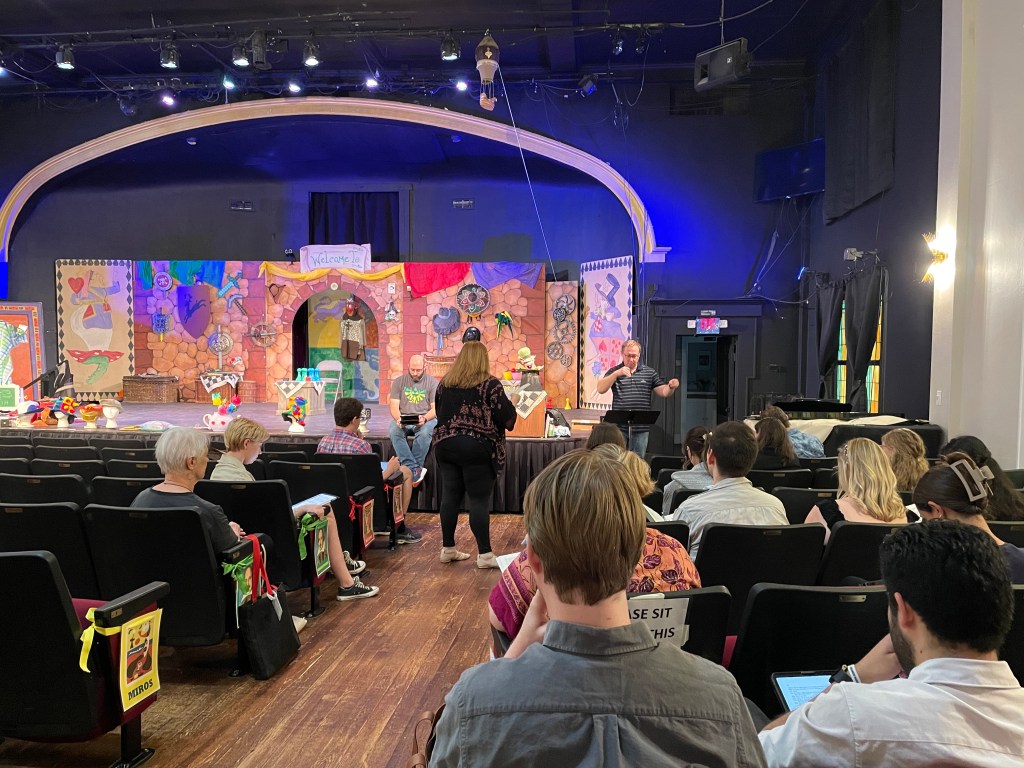
Jodi Bobrovsky, scenic designer for Gilbert and Sullivan Society of Houston’s 2023 production of “Pirates of Penzance” / Photo by Corey Nance
Houston Arts Journal reached out to Nicole Kenley-Miller for the following interview about her vision as a stage director and her production team’s interpretation of Pirates:
Houston Arts Journal: Throughout your career, you’ve “worked fluidly between the opera and music theatre genres,” as your bio says. How did your love of the performing arts begin?
Nicole Kenley-Miller: I grew up singing in school and church choirs. When I started my undergraduate degree, I was just planning to sing as a hobby while pursuing a pre-med degree. Even though I had never seen an opera, I decided to audition for the production my freshman year, and they cast me as Florence Pike in Benjamin Britten’s Albert Herring. The opera bug bit me, and I changed my major to Vocal Performance.
I went on to study at Eastman School of Music and then had a long career singing and teaching voice in the Houston area where I gradually became more interested in stage direction, because it offered more scope for the imagination. I started directing shows around Houston and ultimately got a doctorate in Opera and Directing at University of Houston. Each show I direct is a new world I get to step into and learn about. While I still sing, directing is now my main focus, and I have never looked back.
HAJ: Do you remember the first production you ever directed? What was that experience like? I’d love to hear a bit of the story behind that, in the spirit of getting to know you.
NKM: The first few productions I directed were for Lone Star College–Cy-Fair. I remember a production of Camelot we did there, which included an original set and costumes–a fairly significant amount of resource for a director who is just starting out. Usually at that point in one’s career, you have to make do with some black theatrical cubes and costumes from the actors’ closets. But I actually had the opportunity to collaborate on a design with their in-house set designer and a costume designer, who was the mother of one of the cast members. The conception and design of a show is a part of the process that I have come to love so much, because it allows me to create a world and imagine ways to tell these beloved stories through different lenses.
Stage Director Nicole Kenley-Miller in rehearsal with the cast of Gilbert and Sullivan Society of Houston’s 2023 production of “Pirates of Penzance” / Photo by Karen Jones
HAJ: You’re taking over as director of the Gilbert and Sullivan Society of Houston after 40 years of Alistair Donkin at the helm. What do you personally enjoy—or want people to know—about Gilbert and Sullivan’s work?
NKM: It has been such an honor to be the first director to open a new chapter for the Gilbert and Sullivan Society after Alistair’s long legacy with the company. I worked with Alistair Donkin and Robert Linder as a G&S chorister and understudy of Katisha in The Mikado when I was fresh out of undergraduate school in 1997, and I will always be grateful to them for their encouragement of me in the early stages of my career.
Gilbert & Sullivan is such great repertoire for young singers to get their start. It offers very accessible music and dialogue that draws on so many of the fundamental concepts of comedy that have been passed down over time. If a singer can do this kind of broad comedy, which is so dependent on good timing and understanding of how to use one’s body, they can pretty much do anything else on stage.
Many people don’t realize that Gilbert & Sullivan is a historical touchstone for much of our modern-day music theatre, and it has been a major influence on so many artists who write and perform on Broadway stages and in film today—Lin Manuel-Miranda, Andrew Lloyd Webber, Kelsey Grammer, to name a few.
HAJ: You happen to be only the 2nd woman to direct Houston’s Gilbert and Sullivan Society. The company tells me that previously Carolyn Franklin directed The Gondoliers in 1978. Because I know that you’re interested in the intersection of social/cultural issues and art, I wanted to ask how you view your opportunity to direct this production as a female director? What aspects of Gilbert and Sullivan’s work do you wish to bring out, which might have been overlooked—or could be reinterpreted?
NKM: It is such an honor to be the second woman to direct for the Society. As a woman in the male-dominated industry of stage directing, the particular lens I bring to every show cannot help but be influenced by my perspective as a woman. I have created and directed several pieces that are explicitly about a woman’s perspective, such as my recent work The Women Have Something to Say that opened off-Broadway in New York back in May.
While it’s not always possible to be as direct with these themes in more traditional operas, I find that I am constantly trying to reevaluate the female characters in a show by going back to the original text that the librettist wrote. With so many of these canonical works, the composers and librettists originally wrote the female characters in strong and dynamic ways, which have often been watered down or smoothed out by directors over decades of performance practice. I often find this with Mozart heroines, and it is equally an issue with historical interpretations of the women in Gilbert and Sullivan. I hope the audience will see that we are presenting the women’s roles in Pirates in a new light.
There is also an opportunity with G&S to bring out the original intent of their works, which was to poke fun at the very aristocratic class that had the means to attend their performances. Their works were originally a satirical commentary on the socio-economic inequities that existed in their day. Over time, this intent has been lost, so we’re trying to punch up those themes in this production of Pirates as well.
Cast blocking during a rehearsal of Gilbert and Sullivan Society of Houston’s 2023 production of “Pirates of Penzance” / Photo by Karen Jones
HAJ: Can you tell us about your take on Pirates—and, in particular, your “fresh spin” on the character Mabel?
NKM: I’m most excited about the portrayal of Mabel. In other productions I have seen, she tends to be played as a cutesy, coquettish ingénue that is waiting around for a man to come and save her. But that is simply not supported by the librettist’s text. Gilbert paints her as a fiery young woman who knows what she wants and who is not afraid to speak up and get it. From the beginning of my conception for the piece, I knew that Mabel was going to be the key to a new interpretation.
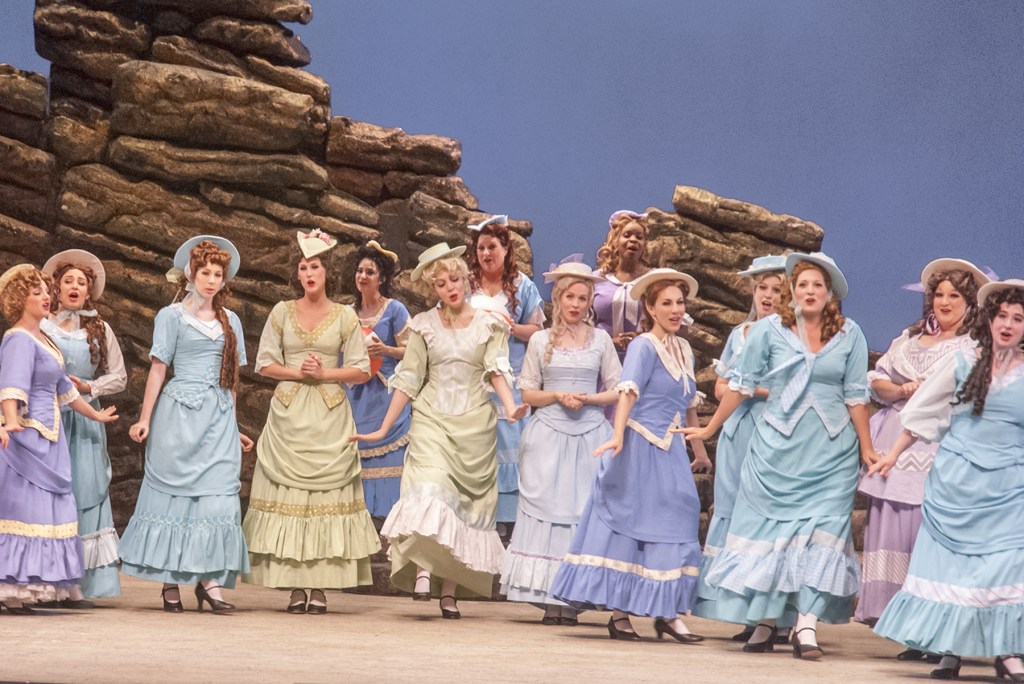
To amplify her character, I decided to update the piece from its usual 1870s setting to 1893, so that we could capitalize on the historical synchronicity of the burgeoning women’s suffrage movement in Britain. Moving to the late 19th century also allowed us to explore different costumes for the women. When we first meet them, they are hiking over the Cornish seaside cliffs, so this later setting allowed us to put them in late-Victorian hiking or cycling suits, and opened the door for Mabel to be in, [gasp], pants!
HAJ: This production seems to have a female-led creative team—not only yourself as a director, but a total of 11 women involved with producing this show (9 creative team artists and 2 interns). You shared with me that this is a “high percentage vs. the usual in the industry.” Can you give a little context to how this compares to the industry based on your personal experience of gender equity?
NKM: I am very proud of the large representation of women on our design and production team. While women are often behind the scenes in so many areas of opera and theatre, particularly in costume design, stage management, and dance, there are certain roles in the theatre which still have a glass ceiling for women—particularly the areas of stage direction, set design, and lighting design. Though I am happy to say that this is gradually changing in the opera industry, there is still work to be done, so I am proud to have this team of women playing such a central role in Pirates.
HAJ: As a follow up, what do you see as the significance or impact of having a female-driven production?
NKM: For me, the significance of a greater presence of women in leadership in opera is not about quotas and numbers, but rather in expanding and enriching the way we tell these stories. When women or any underrepresented group tell a story, we cannot help but bring our experience to the table. Because I’m a woman, I am automatically going to bring a more organic understanding of the female characters to the forefront in my interpretation. And that vision then allows the design and production team to follow suit within their specialties of sets, costumes, choreography, etc. Ultimately, I believe the art form will benefit by expanding the way we tell these stories so that they can speak to a wider range of audiences and attract a new generations of opera lovers.
Music rehearsal for Gilbert and Sullivan Society of Houston’s 2023 production of “Pirates of Penzance” / Photo by Joe Carl White
HAJ: Lastly, this year’s Pirates also features new sets designed by Jodi Bobrovsky and new costumes by Shaun Heath and Mary Webber. Can you give us a sense of what they look like and how they complement your vision of this production?
NKM: I am so excited about the new designs that Jodi Bobrovsky, Shaun Heath, and Mary Webber have brought to the table. They are colorful and full of life. The costumes are always a central way in which we communicate the period of the piece. Shaun and Mary’s designs have allowed us to capture the late Victorian look that the setting calls for, but in an anachronistic color palette for this time period that reflects the exaggerated nature of Gilbert and Sullivan’s outrageous plots and comedy. And Jodi’s colorful set design inspired by British travel posters of the Cornish coast provides a vibrant backdrop to all the hilarity that will ensue in front of it.
It should be mentioned that we have new exciting choreography as well, created by Lauren Pastorek. There is so much movement in this production, and there will never be a dull moment. All of these women have been so integral to casting a new vision for this piece, and I have so much admiration for their expertise and long histories in the Houston opera and theatre scene.
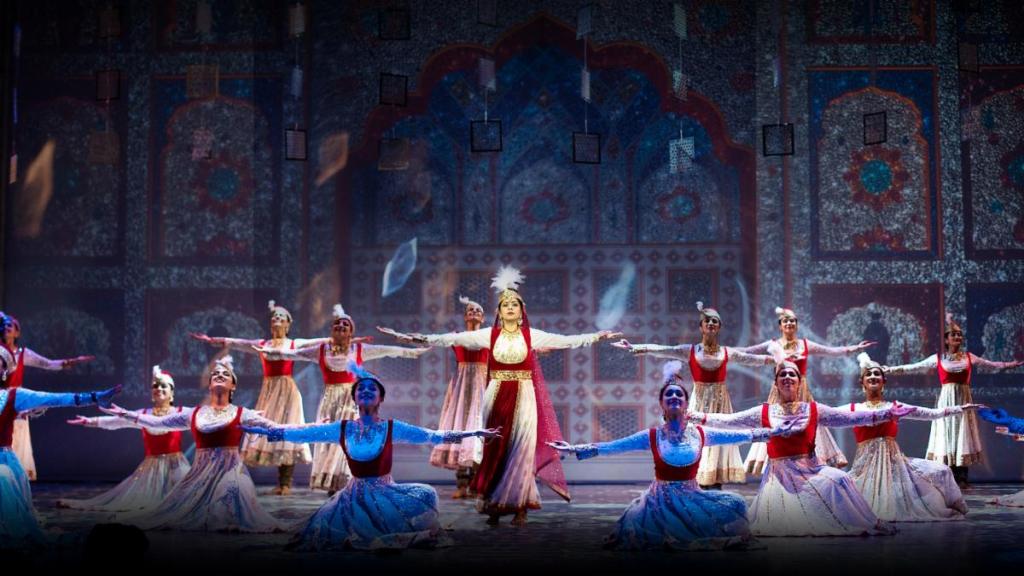
Scene from “Mughal-e-Azam” / Courtesy of mughaleazamplay.com
Considered the first original, large-scale Broadway-style music written and produced in India, Mughal-e-Azam is in the midst of its first North American tour, making a stop in Houston for performances July 14 – 16 at the Wortham Center’s Brown Theater.
Based on the epic, blockbuster 1960 Bollywood movie of the same name, Maughal-e-Azam: The Musical premiered in 2016 in Mumbai and has been described in a press release as “a love letter to South Asian history and legend,” as well a “a love story as familiar to Indians and their Eastern neighbors as Romeo and Juliet is to the West.”
In the era of the Mughals, Emperor Akbar’s desire of a son is fulfilled when his wife, Jodhabai, gives birth to Salim, who grows up to be a spoiled brat filled with disrespect and self-indulgence. Consequently, he’s sent off to war in Akbar’s army and returns as a reformed person with perseverance and discipline fourteen years later. Salim, now a young man, falls in love with Anarkali, a lowly courtesan. Bahar, a dancer who covets the love of the Prince, is filled with jealousy upon discovering the secret affair and exposes it to Akbar. The emperor, full of royal pride, vehemently disapproves of the relationship and imprisons Anarkali, which leads Salim to declare an open rebellion against him. The war between father and son changes the lives of everyone in the empire threatening the foundations of the Mughal rule in India.
synopsis of “Mughal-e-Azam,” press release
Produced by Shapoorji Pallonji (who produced the original film) and directed by Feroz Abbas Khan, the musical stage adaptation was nominated for 14 Broadway World India Awards in 2017 and won seven for Best Play, Best Director, Best Costume Design, Best Choreography, Best Original Set Design, Best Original Lighting Design, and Best Ensemble Cast.
Scene from “Mughal-e-Azam” / Courtesy of mughaleazamplay.com
The production includes 350 cast and crew members, more than 550 costumes designed by Bollywood designer Manish Malhotra, and reimagined choreography from the 1960 film.
“Seven years back, when we green-lighted this project, we had not imagined that it would run for 19 seasons and travel to Singapore, Kuala Lumpur, Dubai, Muscat, Doha, and now North America. There is a lot of technical and logistic expertise that goes into a massive show like this, but what really makes it universally loved is its emotional core and the love story of Salim and Anarkali,” said Deepesh Salgia, head of Creative and Strategic Vision for the musical, in an article by Hindustan Times.
Presented by Bollywood Entertainment, in partnership with Houston’s Indo-American Association, Mughal-e-Azam’s North American tour kicked off with a flash mob in New York City’s Time Square, and then began its official 13-city tour on May 26 in Atlanta. The production will travel to Dallas, following its Houston performances.
The show’s dialogue and lyrics are spoken and sung in Urdu and Hindi, with English subtitles.
Houston Ballet Music Director and Principal Conductor Ermanno Florio in rehearsals with the Houston Ballet Orchestra / Photo by Amitava Sarkar (2016). Courtesy of Houston Ballet.
Houston Ballet recently announced that the 2023-2024 season will be Ermanno Florio’s final season as Music Director after 32 years at the podium.
“Although I’m stepping down as Music Director of Houston Ballet, I will continue with my international conducting career and look forward to the possibility of guest conducting with the Company in the years ahead,” said Florio in a statement.
Musicians of the Houston Ballet Orchestra describe Maestro Florio as a “strong musical leader” with “an unerring sense of tempo and timing, so crucial in ballet,” who has shown great care and compassion with colleagues over his decades with the company.
Houston Ballet says that Florio has been the Principal Conductor for every production since he joined the company in 1992, from repertoire spanning the classics of Tchaikovsky, Prokofiev, and Stravinsky to many world premieres.
Florio also guided and led the orchestra through the COVID-19 pandemic, including a socially-distanced recording session in January 2021, which marked the first time since the start of the pandemic that the orchestra reunited on stage at the Wortham Theater Center.
“What we do is bring people together. When the music starts, there’s a sense of unity. I still get shivers thinking about it—it’s gratifying and good for the soul,” Florio told Houston Chronicle reporter Amber Elliott at the time.
Houston Ballet Music Director and Principal Conductor Ermanno Florio conducting the Houston Ballet Orchestra / Photo by Christian Brown (2015). Courtesy of Houston Ballet.
A Houston Chronicle article in 2008 by Charles Ward recounted the story of how Florio got the job to come to Houston: it started in La Scala, where he had prepared music—to “great reviews”—for a dance production at Teatro alla Scala.
“Former Houston Ballet principal Li Cunxin was a guest dancer in the La Scala show, and former artistic director Ben Stevenson came to see him,” wrote Ward. “Li, Stevenson and Florio all went out to dinner. Florio came to conduct Houston Ballet as a guest during the 1991-92 season; he got the music director job here in 1992.”
In addition to his enduring role at Houston Ballet, Florio was Music Director of the American Ballet Theatre (1998 – 2001) and Music Director of Het Nationale Ballet in Amsterdam (2004 – 2012), where he continues to serve as principal guest conductor. His career highlights also include an extensive and award-winning discography, as well as numerous music arrangements of ballet scores, including Houston Ballet Artistic Director Stanton Welch’s Marie Antoinette and La Bayadère.
Welch called Florio’s ability to bring dancers and musicians closer together “extraordinary.”
“His collaboration with all has resulted in continuous wonderful performances and contributed greatly to our company’s artistic success, all while helping to build the reputation of Houston as one of the greatest cities in the world for art,” said Welch in a statement.
Houston Arts Journal reached out to longtime musicians of the Houston Ballet Orchestra for their following reactions to Maestro Florio’s tenure:
Ermanno is a real humanist, and a really great guy. Approaching him is always easy, even for serious conversations, and he seems to actually enjoy talking with the musicians in the orchestra. He cares about his people very much, and rarely a harsh thing comes out of his mouth, but when it does, we probably needed it. It will be sad to see him go. The man is a very prolific ballet conductor, in rep and in number of performances across the world. 32 years is a long time, anywhere, so his presence as a consistent symbol of the grace and excellence of the Houston Ballet will be missed greatly.
Rene Salazar, Principal Violist since 2003
Houston Ballet Music Director and Principal Conductor Ermanno Florio / Photo by Amitava Sarkar (2011). Courtesy of Houston Ballet.
Ermanno Florio has been conductor with Houston Ballet for over 30 years … I joined the orchestra 27 years ago, so I’ve been witness to his remarkable journey. During his tenure, the ballet orchestra has blossomed, in large measure due to Ermanno’s steady cultivation and balanced leadership … Whether performing a tried and true classic or something outlandish and new, Ermanno brings to the podium a serious dedication to the music while navigating a graceful path between dancers, choreographers, stage managers, and musicians, all the while arriving at the podium with an elegance and charisma and with never a hair out of place … With an unerring sense of tempo and timing, so crucial in ballet, it is no wonder that he has flourished in Houston and in the world of dance, enjoying an international career. The Houston Ballet Orchestra celebrates his legacy and we will miss him. Fortunately, we will have one more great season together!
Barrett Sills, Principal Cellist since 1996
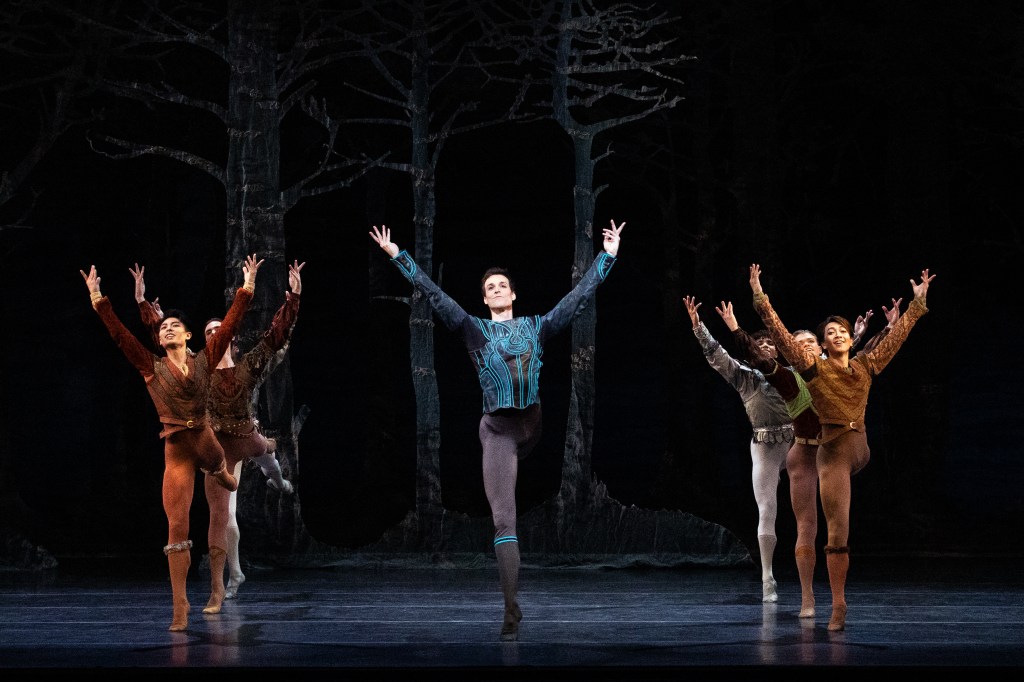
Houston Ballet Principal Chase O’Connell as Prince Siegfried and Artists of Houston Ballet in Stanton Welch’s Swan Lake / Photo by Lawrence Elizabeth Knox (2023). Courtesy of Houston Ballet.
I have known and worked closely with Ermanno Florio throughout his tenure with Houston Ballet. His first appearance with the Houston Ballet Orchestra was as a guest conductor. Following that successful engagement, he became our music director and principal conductor beginning the next season. Ermanno has striven to make the orchestra’s playing a sensitive and compelling musical accompaniment to the choreography. Houston Ballet has been the beneficiary of his many years of conducting on the international stage, all the while growing his knowledge and musical understanding. His standards and expectations are high, and the orchestra has continued to show musical growth each season. He is always a strong musical leader focused on our performance success, but also has a caring and compassionate side when dealing with the members of the orchestra. He has made a huge positive impact on the orchestra, and I will miss working with him greatly.
Rick Reeves, Bass Trombone since 1987 and current Orchestra Manager
According to company representatives, recently appointed Associate Conductor Simon Thew and Florio have worked closely together and in support of each other over the past season and will continue to do so in Florio’s final season. A new music director will be announced at a later date.
L-R: Linda Lorelle, moderator, with Houston mayoral candidates Robin Williams, John Whitmire, Sheila Jackson Lee, Lee Kaplan, Gilbert Garcia, Robert Gallegos, and Amanda Edwards at the Houston Mayoral Forum on Arts and Culture / Photo by Catherine Lu
This past Monday night, the Houston Mayoral Forum on Arts and Culture—the first candidate forum of this campaign—took place before a packed audience at the Hobby Center’s Zilkha Hall.
The public event was organized by the city’s seven state-designated cultural districts: Arts District Houston, East End Houston Cultural District, 5th Ward Cultural Arts District, Houston Museum District, Midtown Cultural Arts and Entertainment District, Third Ward Cultural Arts District, and Theater District Houston.
In an interview with Houston Public Media, Alison Weaver, Co-President of the Museum District Association and Director of Rice University’s Moody Center for the Arts, said it was exciting to see Houstonians’ enthusiasm and support for the city’s arts and culture.
“We had over 600 people registered for the event before we had to shut down the online registration system,” said Weaver on Houston Matters with Craig Cohen. “So, the energy in the room was fantastic. The interest from across the city was extraordinary.”
According to Hillary J. Hart, Chair of Theater District Houston and Executive Director of Theatre Under the Stars, 400 people showed up in person for the event, filling Zilkha Hall to near capacity.
One of those in attendance was writer, activist, and Houston Poet Laureate, Aris Kian Brown, who live tweeted the forum from her perspective as a member of the arts and culture community:
WE BEGIN! Follow along as I live tweet from Mayoral Forum for Arts & Culture. The room is packed with cultural advocates, arts admin, artists, community organizers and residents at the intersection of all. 🔥 pic.twitter.com/Sw7OLsjSjU
Brown documented the candidates’ responses—including goals to increase public art, create affordable housing for artists, and identify new sources of funding for artists—while also expressing her frustration for what she called a lack of “innovative solutions.”
“The candidates had no genuine solution or long-term engagement with arts institutions or artists. We have so much work to do,” she tweeted.
Seven Houston mayoral candidates participated: Amanda Edwards, Robert Gallegos, Gilbert Garcia, Lee Kaplan, Sheila Jackson Lee, John Whitmire, and Robin Williams.
Emmy Award-winning journalist Linda Lorelle served as moderator. Lorelle is also a ballroom dancer, who has been involved on the advisory board for Hope Stone Dance.
Lorelle told the audience that all of the questions were “sourced after conversations and interaction with all of you in the community. So, these are the questions you want answered.”
Candidates responded in alphabetical order, with two minutes to answer each question.
You can watch the entire 2023 Houston Mayoral Forum on Arts and Culture, recorded by Houston Media Source, here:
Forum Questions:
“More than 70% of Americans believe that the benefits of the arts extend beyond the individual to the community. If you are mayor and are planning for the city of the future, how will you ensure that Houston is recognized as a cultural leader?” [14:00 mark in the video]
“Dallas spends on average $17 per capita on the arts, while Austin spends $22.90, compared to Houston’s—are you ready for it—$6.70 … Houston’s thriving arts and culture scene is a significant contributor to the quality of life for its residents and visitors. It is an important economic driver, a primary recruiting tool for corporations, and a key tourism attraction for the city. So, in addition to the current Hotel Occupancy Tax allocations, what plans do you have as Mayor to increase funding for the arts outside of the Hotel Occupancy Tax?” [27:05 mark in the video]
“The city’s previous Cultural Plan is dated 2015. What is your plan as Mayor to invest in and commit to a new citywide Cultural Plan for 2024 and beyond? How will you ensure that diversity, equity, and inclusion are prioritized under this plan?” [42:30 mark in the video]
“There is near universal support for arts education: 91% of Americans believe that the arts are part of a well-rounded K-12 education. Over 90% say students should receive an education in the arts in elementary, middle, and high school. With the state taking over HISD, how will you as Mayor assist schools in making arts education a priority and accessible?” [57:16 mark in the video]
“The arts sector needs artists and workers to thrive. How would you as Mayor ensure that Houston’s diverse artists and cultural workers stay here and thrive here?” [1:12:23 mark in the video]
You can also read the candidates’ written responses to a Pre-Forum Q&A here.
Davidson said he felt “grateful and glad”—as well as stunned—to learn that he had earned both honors for his performance of Rossini’s Bassoon Concerto in the competition’s Final Round on June 11, as part of TMF at the University of Houston.
“I remember thinking and stammering in my own thoughts, Oh my gosh. I won. I actually won. Oh my gosh. This is unreal. I won. Oh my gosh,” he said in an email to Houston Arts Journal. “I am not lying when I say the shock and disbelief lasted for at least another 20 minutes.”
Davidson takes home a $2,000 cash prize—$1,500 for First Place plus $500 for being voted Audience Favorite—and two solo performance opportunities: one with the TMF Orchestra on June 24 and another with the Houston Symphony during its 2023-24 season.
UH’s Texas Music Festival is a selective three-week summer academy for emerging, advanced orchestral musicians, who are pursuing a career in classical music. Organizers say that 81 young artists were accepted from 273 applicants for this year’s festival. Of those 81 TMF musicians, 25 auditioned for the Mitchell-Hogg Competition, and only five finalists made it to the last round.
Finalists included flutist Lorien Britt, a 19-year-old Dallas native and Manhattan School of Music student (Second Prize, $1000); violinist Momoko Uchida, a 22-year-old New York native and recent graduate of the Mannes School of Music (Third Prize, $750); harpist Lily Primus, a 20-year-old Denver native who attends Rice’s Shepherd School of Music; and double bassist Colin Roberts, a 19-year-old Seoul, Korea-born Houstonian who has studied at Baylor University and who will join UH’s Moore School of Music this fall.
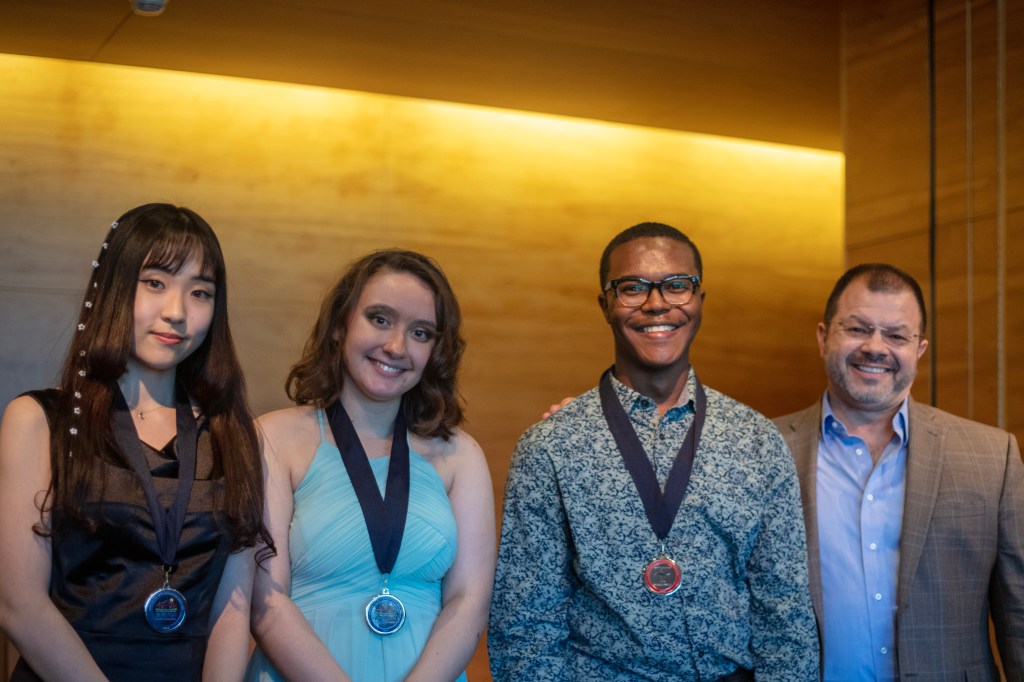
2023 Cynthia Woods Mitchell-Ima Hogg Young Artist Competition winners, L-R, Momoko Uchida (3rd Place), Lorien Britt (2nd Place), Xayvion Davidson (1st Place & Audience Favorite), and TMF Director Alan Austin. Photo by Felipe Harker/Univ of Houston Kathrine G. McGovern College of the Arts
Houston Arts Journal reached out to First Prize and Audience Favorite Winner, Xayvion Davidson, for the following interview:
Houston Arts Journal: Congratulations on your win, Xayvion! When did you start playing bassoon? What drew you, and continues to draw you, to this instrument?
Xayvion Davidson: Thank you! I am unique in the regard that I started on bassoon in fifth grade. I have been playing for nine years. Most people start on clarinet or flute, but the bassoon looked fascinating, had a unique sound, and looked quite difficult. Originally, I thought it was an oboe, which funnily enough was my second choice and all I have to say is, “Thank GOODNESS my mom corrected me!” Imagine having to make oboe reeds for life. Can you imagine all that time wasted on something that probably won’t even work? Sadly, I can relate because I’m doomed to make reeds, thanks to the bassoon.
I got serious about music once I heard of regional band and met my first teacher Dr. Maya Stone, who helped me get into the regional band. When I was there, I enjoyed the social aspect and making music with people as passionate as I was about music and that was what made me want to go pro. What draws me to the bassoon now is the range of the instrument, which is about 3.5 octaves, and the wide range of characters it can portray, from the comedic Sorcerer’s Apprentice to Tchaikovsky’s downright depressing Sixth Symphony.
HAJ: Who are your bassoon heroes or musical heroes?
XD: As for bassoon heroes, Mr. Benjamin Kamins, Dr. Stone, and my fellow studiomates are heroes. Mr. Kamins continues to inspire me, and I have learned a lot from just one year of studying under him because he is a phenomenal teacher. I also learned that he is truly a mentor in every sense of the word. I recall him once saying to me, “Xayvion, I will help you with your reeds until the day I croak.” Though I found it comical, he has helped me and students who have graduated with reeds and continues to check up on them. When he can, he will go to students’ performances and cheer enthusiastically. If his students are around Houston, they will drop by Rice to introduce themselves or sit in on a class.
Though I only studied with her for one year, Dr. Stone is a hero to me because she continues to be a mentor and is there for me when I need it. I am eternally grateful for the support that she has and will continue to give me.
Last but certainly not least, my studiomates are a constant source of inspiration because we are supportive of each other. When I see my studiomates grow and succeed over the year, it is proof that I am in the right spot to accomplish my dream of being an orchestral musician, and I get inspired to work harder.
HAJ: Can you describe how you felt the moment you won the Cynthia Woods Mitchell-Ima Hogg Competition?
XD: Oh, I think everyone who was in the reception hall Sunday could have EASILY answered that one. The one word I immediately felt when I was announced as the winner was shock, followed by disbelief, and it DEFINITELY showed. My mouth was WIDE open after I was announced the winner, when I walked up to the stage with my mouth open, and when I turned around for another ten seconds—maybe more—still gaping. I remember thinking and stammering in my own thoughts, “Oh my gosh. I won. I actually won. Oh my gosh. This is unreal. I won. Oh my gosh.” I am not lying when I say the shock and disbelief lasted for at least another 20 minutes.
HAJ: In addition to the prize money, you’ve won performance opportunities with the TMF Orchestra and the Houston Symphony. What’s most important to you as a performer? What are you trying to communicate or achieve each time you go on stage?
XD: What is important to me is trying to get a message across to my audience because as I have heard from my parents, amongst others, the impression you leave is the most important thing. It is rare to play a technically perfect audition, but if you left a memorable impression on the committee, you still stand a chance of winning. For example, when I was performing the Rossini, I thought about being an opera singer because the concerto sounds very operatic. To me, the first movement sounded like it was about a singer professing his love, and to try to be in the right headspace, I thought of singing to my girlfriend. I love her, and when I was singing my ideas with sappy made-up lyrics, I had fun preparing this.
HAJ: What are your goals or dreams as a musician?
XD: As of right now, my goal is to win an orchestral job, preferably before I graduate, and become a great private instructor.
***
Xayvion Davidson begins his sophomore year this fall at the Shepherd School of Music at Rice University, studying under Professor Benjamin Kamins. Davidson is an alumnus of the Nashville Symphony’s Accelerando program and NYO2. In 2022, he served as alternate bassoonist and apprentice manager for the National Youth Orchestra of the USA. His honors also include winning the 2022 Curb Youth Symphony Concerto Competition. When he is not practicing the bassoon or making reeds, he enjoys watching TV with his family or playing Splatoon 3.
















 Houston Arts Journal